
Seasonal Inventory Planning for Fur Products: Wholesale Merchandising Tips
Brand: JSFUR | Official Website: https://www.jsfur.com
Introduction
Fur products are among the most seasonally sensitive categories in outerwear wholesale. A fur coat carries a high unit price, a narrow selling window, and fast value depreciation once the season passes. Many wholesale buyers source attractive styles but still end up with overstocked warehouses, discounted clearance piles, or missed sales because inventory was planned by intuition rather than merchandising discipline.
Seasonal inventory planning for fur products is not just deciding how many pieces to buy. It means structuring your SKU range, allocating budget across core and trend items, scheduling production and replenishment around the selling calendar, protecting stored goods, and planning sell-through before the season even starts. At JSFUR, we work with wholesale merchandisers every season to align production capacity with their inventory plan. This guide shares practical merchandising tips to help you build a profitable, low-risk fur assortment.
Why Fur Inventory Planning Differs From Regular Apparel
Before applying generic retail inventory formulas, buyers need to understand four fur-specific characteristics that change the math:
- Short selling window: Most fur demand concentrates in 8–12 winter weeks. Stock that misses the peak rarely recovers value the following year, as fashion colors and silhouettes move on.
- High unit cost per SKU: A single fur coat ties up far more capital than a basic sweater, so overbuying one style creates disproportionate cash-flow pressure.
- Storage sensitivity: Unsold fur must be kept dry, ventilated and pest-controlled; poor off-season storage causes matting, mold and odor that destroy resale value.
- Limited reorder flexibility: Real fur pelt batches and peak-season factory capacity cannot be reproduced overnight, so a late-season reorder window must be planned in advance.
These traits make "buy once, sell all season" a high-risk strategy. Successful fur merchandisers plan inventory in layers and stages.
1. Build a Tiered SKU Structure: Core, Trend and Limited
Instead of splitting budget evenly across every style, divide your assortment into three tiers with different depth targets:
Core bestsellers (60–70% of budget) Timeless silhouettes in proven colors — classic cropped jackets, reversible coats, fur-trimmed outerwear. These carry predictable demand and should be stocked deepest. They anchor sales volume and cover fixed costs.
Trend styles (20–25% of budget) New colors, textured surfaces or current-season silhouettes tested in small quantities. Trend SKUs bring freshness to your catalog but carry higher sell-through uncertainty; buy shallow and reorder only after early sales data confirms demand.
Limited / capsule pieces (5–15% of budget) Luxury real-fur statement pieces or special collaboration items targeting premium customers. Keep quantities small; their role is brand image and margin, not volume.
This tiered structure prevents a single risky trend bet from consuming your entire seasonal budget.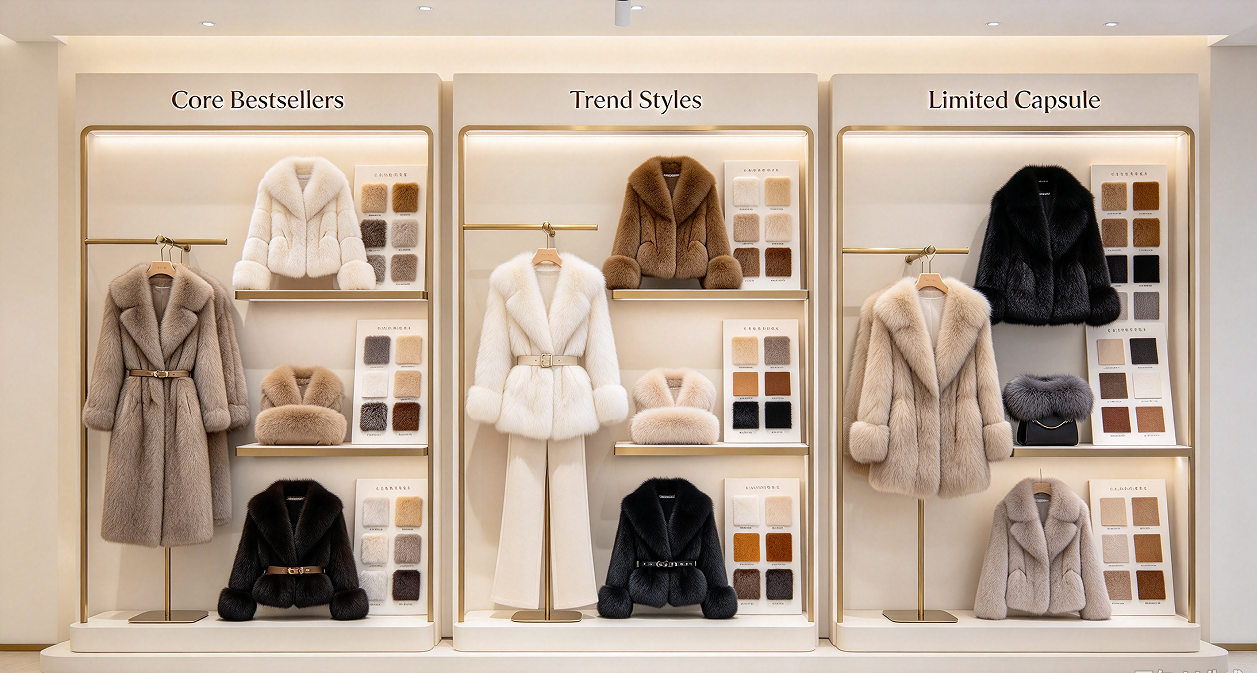
2. Set Open-to-Buy by Season, Not by Style
Open-to-buy (OTB) planning allocates your total seasonal budget before placing orders, leaving reserved capital for mid-season replenishment rather than spending everything at first purchase.
Practical steps:
- Set total seasonal inventory budget based on projected sales and target gross margin, not on supplier minimums.
- Allocate budget across the three SKU tiers above.
- Reserve 15–25% of budget as an uncommitted reorder fund for proven winners.
- Track open-to-buy weekly during the season; release reserved budget only to styles showing real sell-through.
A common mistake is spending the full budget on the first production run. With fur's long lead time, you cannot simply reorder a winner overnight — but reserving capital lets you act when early data appears.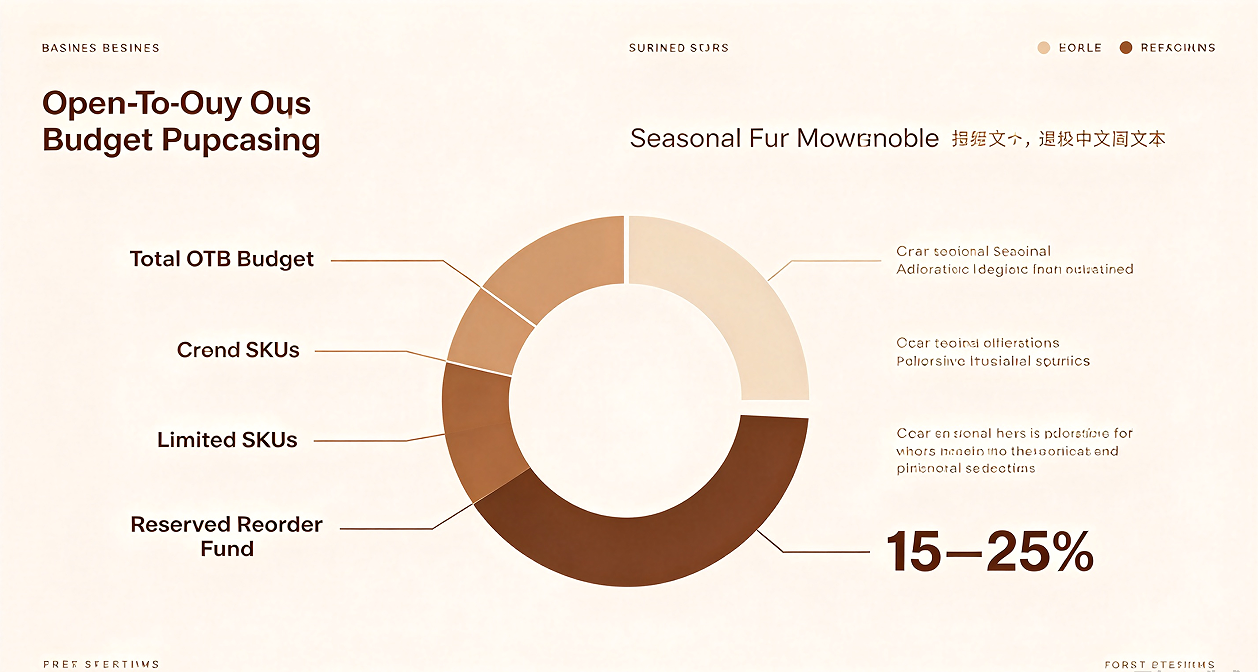
3. Plan a Two-Stage Buying Rhythm: Initial Order + Reorder Window
Fur production lead times and pelt availability make a single bulk order inefficient. Use a staged rhythm:
- Initial order (late spring / early summer): Cover core styles at full depth and trend styles at test depth. Lock raw materials and production slots early.
- Mid-season reorder window (early autumn): After pre-season sales, trade-show feedback and early customer orders, release the reserved budget to replenish confirmed winners. Confirm with your manufacturer that this reorder slot exists before the season starts.
At JSFUR, we support staged production and partial shipment for wholesale clients, so buyers can place a conservative initial order and scale proven styles without re-opening full production planning.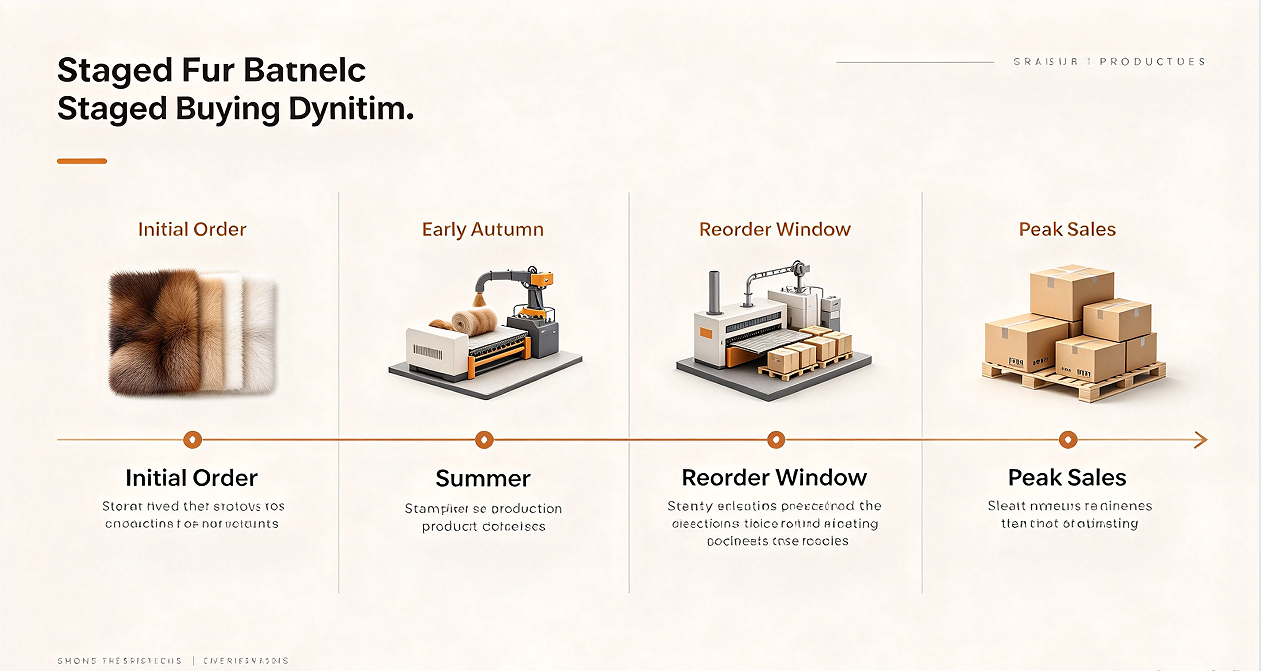
4. Match Inventory Depth to Market Size and Risk
Depth per SKU should follow your market reality:
- For boutique buyers with limited capital: favor fewer SKUs, deeper core stock, minimal trend experimentation.
- For multi-store retailers: widen the trend tier and use store-level sales data to allocate replenishment by location.
- For e-commerce DTC brands: keep trend SKUs in shallow test runs and rely on fast reorder communication with the factory.
Always calculate the break-even sell-through rate per SKU before ordering. If projected sell-through cannot cover product cost, storage and markdown risk, reduce depth rather than hope for a surprise hit.
5. Plan Storage and Sell-Through Before Buying
Inventory risk does not end when goods arrive. Plan storage conditions for unsold stock in advance:
- Dry, ventilated storage with humidity control; sealed plastic bags cause mold and odor on natural fur.
- Pest prevention measures for off-season holding.
- First-in, first-out rotation so older stock sells before it loses current-season appeal.
Also pre-plan your sell-through schedule: set weekly sell-through targets for each tier, and define the trigger date when slow-moving items move to promotional pricing rather than waiting until season end.
6. Seasonal Markdown and Clearance Discipline
Fur inventory cannot be carried over as next season's automatic assets. Decide markdown zones before the season begins:
- Core styles: hold price through peak season; only trim at planned clearance events.
- Trend styles: mark down earlier if early sales lag, to recover capital before demand disappears.
- Limited pieces: avoid deep discounting that degrades brand image; sell through at controlled events or hold for targeted customers.
Clearance discipline protects gross margin better than ad-hoc discounting, and it prevents last-season stock from consuming warehouse space for new arrivals.
7. Close the Loop: Post-Season Sell-Through Review
After the season ends, review every SKU against its plan: actual sell-through, return rate, markdown depth, and which tier performed as expected. Feed this data back to your manufacturer for next season's sample selection and budget allocation.
A simple SKU scorecard — planned vs actual sell-through, margin achieved, storage cost — becomes your most valuable merchandising tool year over year. Suppliers like JSFUR can use this feedback to recommend next-season styles, material options and production depth together with you.
How JSFUR Supports Wholesale Inventory Planning
JSFUR does not treat buyers as one-order customers. Our merchandising support includes:
- Staged production and partial shipment options for initial order plus reorder rhythm.
- Flexible depth on core styles and small test runs for new trend pieces.
- Early raw-material reservation to keep your reorder window open during peak season.
- Transparent production updates so buyers can plan sales launches around confirmed arrival dates.
Visit https://www.jsfur.com to discuss your seasonal assortment plan with our B2B team before next buying season.
Conclusion
Profitable fur wholesale starts with inventory discipline, not just attractive sourcing. A tiered SKU structure, reserved open-to-buy budget, staged buying rhythm, pre-planned storage and markdown rules, and a post-season data review together convert seasonal demand into repeatable margin. Pair this merchandising system with a manufacturer that supports flexible production, and you reduce both overstock risk and missed-reorder risk.
Share this article