How to Set Up Standard Fur Garment Sample Approval Procedures for Bulk Production
Brand: JSFUR | Official Website: https://www.jsfur.com
Introduction
Fur apparel manufacturing differs drastically from regular woven clothing. Natural fur pelts, manual splicing, special tanning techniques and complex trimming craftsmanship create unique sampling challenges. For wholesale buyers, private-label brands and procurement managers, loose, informal sample approval workflows frequently trigger costly bulk order failures: inconsistent fur direction, mismatched leather base softness, incorrect color shades, defective splicing and inconsistent craftsmanship between samples and mass-produced goods.
Many fur suppliers deliver flawless custom samples yet cut corners during bulk manufacturing. Without standardized sample approval protocols, buyers lack enforceable reference standards when disputes emerge. A systematic sample review process locks material specifications, craftsmanship rules and quality benchmarks before raw materials are purchased for mass production, acting as your most effective risk prevention tool.
With years of OEM and ODM experience serving global fashion buyers, JSFUR shares a complete, fur-industry-specific sample approval workflow. This practical procedure is tailored for real fur and premium faux fur garments, helping procurement managers formalize communication with manufacturers, document every revision, and avoid massive financial losses caused by non-compliant bulk goods.
1. Clarify Classifications & Clear Goals for Each Fur Garment Sample Stage
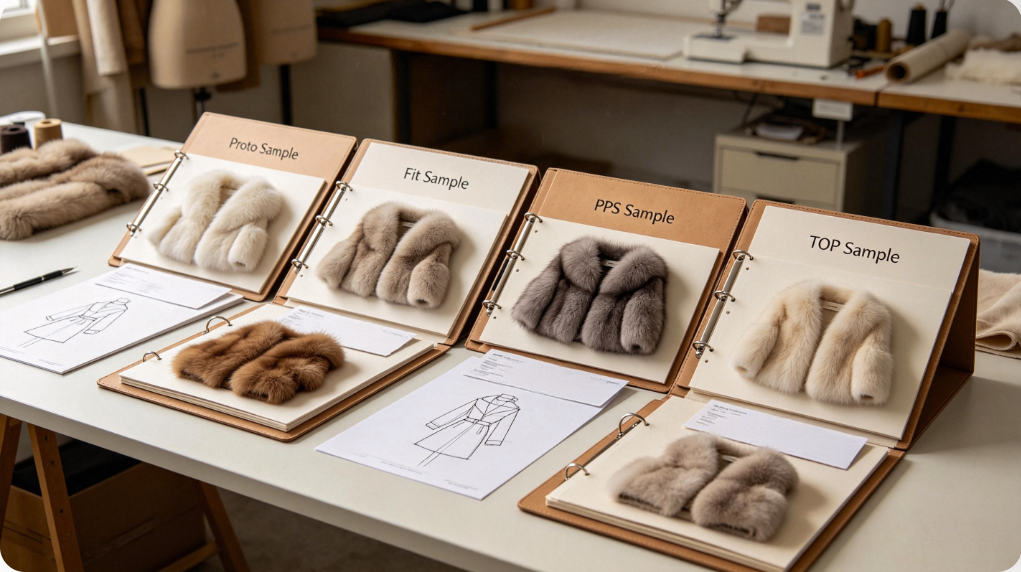
A common mistake among new fur buyers is mixing up sample purposes and applying identical evaluation standards to every prototype. Each sample stage carries distinct responsibilities, especially for fur products sensitive to material variation.
• Proto Sample (Development Sample): Used to verify design feasibility, silhouette, fur splicing layout and basic styling. Substitute fur materials are acceptable at this stage. Focus assessment on overall structure instead of final color, fur grade or finishing quality.
• Fit & Size Set Samples: Confirm sizing grading, wearing comfort, fur drape and symmetry across all size ranges. For fur coats, pay extra attention to shoulder fur distribution, collar shape and hem balance after natural draping.
• Pre-Production Sample (PPS): The most critical benchmark. Must be crafted with identical fur batches, tanning standards, lining, accessories and full production-line processes. This sample becomes your official golden reference once formally approved.
• TOP Sample (Top of Production): The first finished piece off the official mass production line. It verifies whether factory operators can fully replicate the approved PPS under formal production conditions.
At JSFUR, our merchandising team clearly labels sample stages in all communications. We remind buyers not to start bulk material procurement until full written approval of the pre-production sample is obtained.
2. Build Complete Pre-Submission Documentation Checklist Before Sample Development
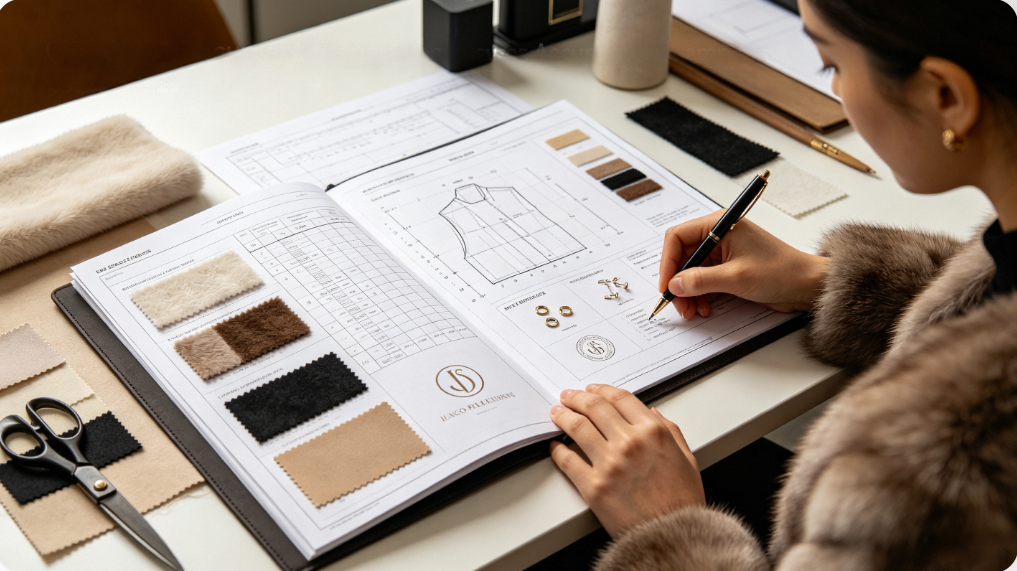
Poor information transfer causes over 40% of fur sample revision cycles. Before manufacturers start making samples, buyers must deliver complete, unambiguous documents to eliminate guesswork. Standard required materials include:
• Fully detailed tech pack: measurement tolerance, stitching specifications, lining requirements and labeling standards
• Fur specification sheet: fur type, grade requirements, hair flow direction, minimum fur density and anti-shedding criteria
• Approved color swatches: fur dye standard, lining color and hardware color matching samples
• Clear packaging, care label and logo embroidery/printing specifications
• Documented restrictions: forbidden craftsmanship, material substitution rules and environmental requirements
All revisions during sampling should be updated in the official tech pack rather than transmitted only via verbal or casual chat messages. JSFUR requires all modification records to be attached to the tech pack file, ensuring technical information remains consistent between sampling and mass production.
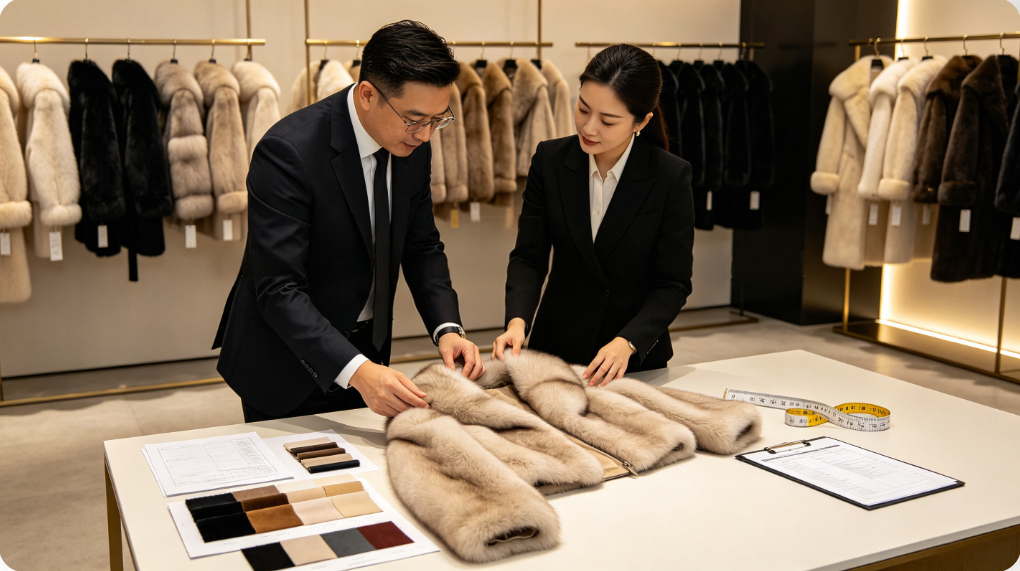
3. Standard Sample Inspection Checklist for Fur Garments During Review
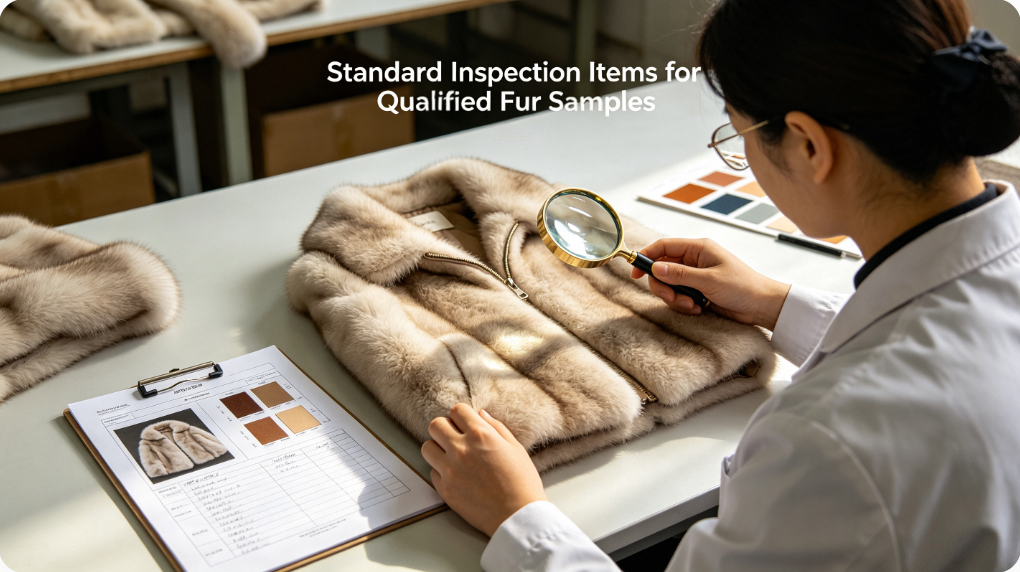
General apparel inspection checklists ignore fur-specific defects. Procurement managers need targeted evaluation criteria for every sample round:
Fur Material Inspection
Check fur uniformity, hair flow consistency, bald patches, underfur fullness and surface luster. Conduct simple anti-shedding tests and verify leather base softness for real fur items. Confirm no unexpected color difference across spliced pelts.
Craftsmanship Inspection
Examine splicing alignment, neatness of seam allowances, trimming precision, symmetry of collar and pocket fur layout. Inspect internal lining flatness, hidden stitching quality and accessory installation stability.
Dimension & Function Test
Measure all key dimensions against tolerance ranges. Test zipper smoothness, button fastness and wearing balance after the garment naturally hangs for at least 24 hours.
Appearance Consistency
Evaluate color tone under natural daylight. Avoid judging fur color under indoor artificial lighting, which often creates visual deviation.
All inspection results should be recorded in structured feedback documents with annotated photos, instead of vague comments such as “fur quality needs improvement”.
4. Formal Feedback & Revision Management Mechanism
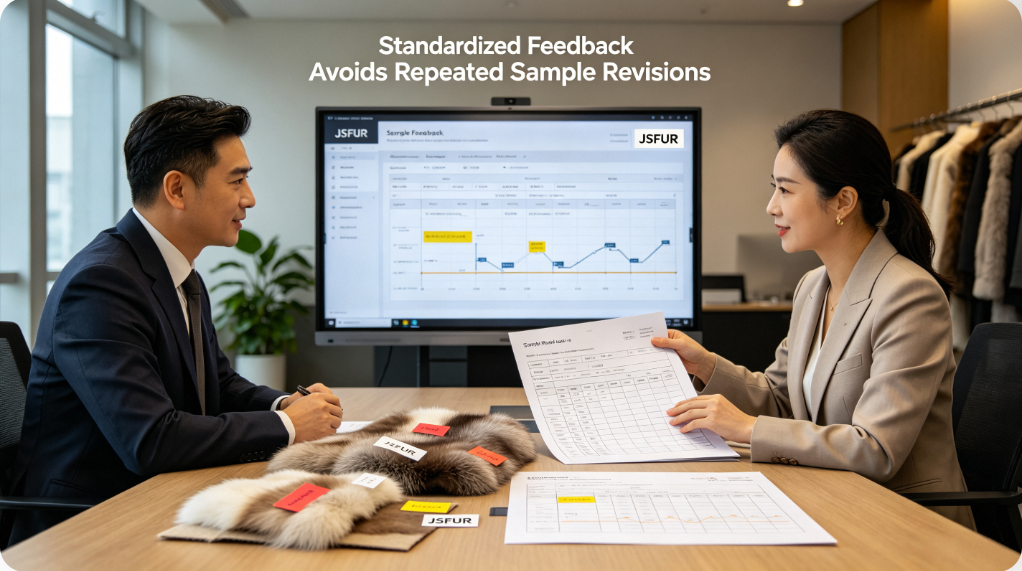
Unstructured feedback creates repeated misunderstandings and extends sampling cycles. Set three standardized response options for every sample received: Approve, Approve with Comments, Require Revised Sample.
If revisions are needed, list adjustments item by item with reference positions, clear standards and agreed timelines for updated samples. Both buyers and factories should maintain a shared sampling log tracking sample dispatch dates, receiving dates, feedback time and revision progress.
Critical rule: if new material changes or major design adjustments emerge after PPS approval, the two parties must negotiate whether a new revised pre-production sample is required before continuing production. Factories cannot adjust raw materials or craftsmanship without written buyer consent.
5. Formal Sign-Off & Management of the Approved Golden Sample
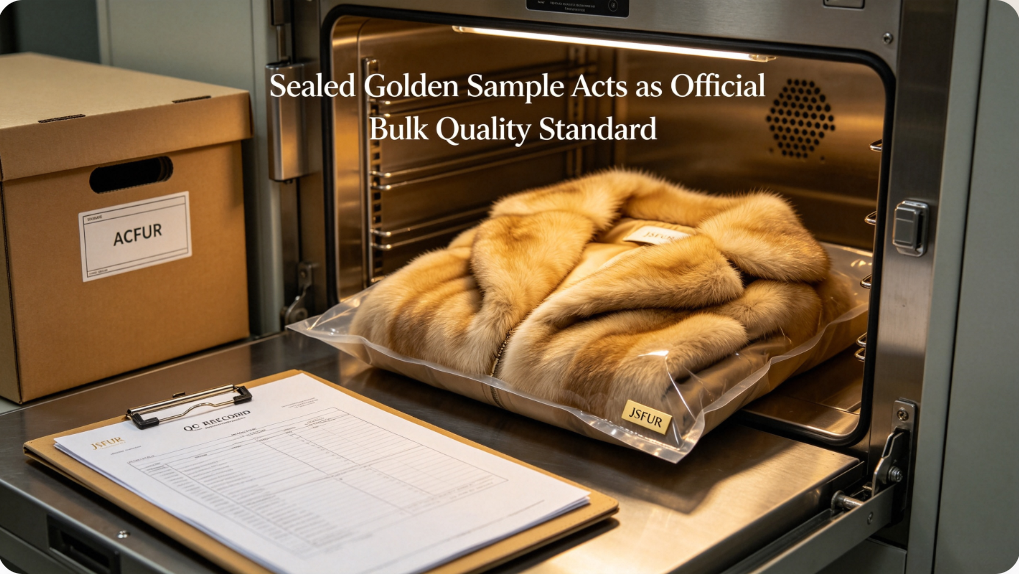
Once the pre-production sample fully meets all requirements, complete formal sample approval procedures. A valid approval should include written confirmation via official email or signed document, rather than informal chat notifications.
Two sealed golden samples must be retained: one stored by the buyer, the other preserved at the manufacturer’s factory QC department. Every bulk shipment inspection will compare finished goods strictly against this sealed sample. If bulk products deviate from the golden sample standards, buyers hold reasonable grounds to negotiate rework or compensation.
JSFUR stores all sealed golden samples in constant-temperature dry warehouses to prevent fur mildew, deformation or color shift during long-term preservation, keeping the reference standard intact throughout the whole order cycle.
6. Implement TOP Sample Audit Before Bulk Shipment
Many buyers overlook TOP sample inspection. Even if the PPS is approved, continuous production may bring new risks: worker operation variation, slight raw material batch differences or unstable finishing effects.
Arrange inspection of TOP samples immediately once mass production starts. Compare every detail with your sealed golden sample. Detect deviations at the earliest stage to avoid producing thousands of non-compliant fur garments.
Common Pitfalls That Break Fur Sample Approval Procedures
• Relying solely on video or photo confirmation instead of physical sample verification. Fur texture, softness and subtle color differences cannot be judged accurately through screens.
• Allowing factories to begin cutting bulk raw materials before formal PPS written approval.
• Losing the sealed golden sample, leaving no enforceable reference standard for final QC inspection.
• Accepting verbal promises of minor adjustments without updating documents and reconfirming via revised samples.
How JSFUR Supports Clients with Standardized Sampling Workflow
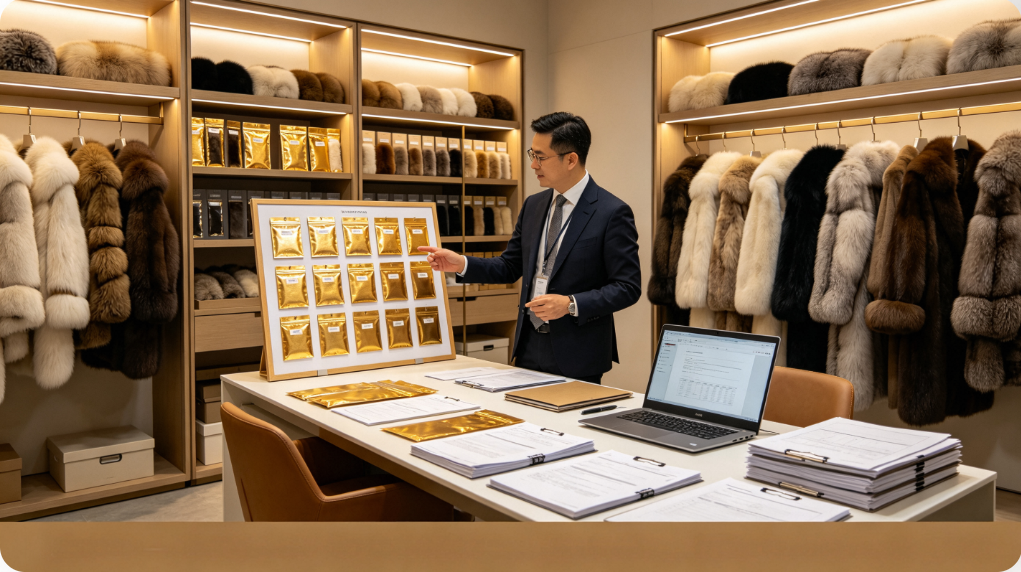
Many small fur workshops lack systematic sampling management, leading to messy revision records and inconsistent standards. JSFUR establishes a full standardized sampling system to align with global wholesale buyers’ procurement protocols:
• Independent sample room dedicated to prototype development following buyer tech pack specifications
• Complete sampling file archiving: store all revision records, updated tech packs and sample photos permanently
• Strict golden sample preservation system for every formal confirmed style
• Dedicated merchandisers to track each sample stage, deliver structured inspection reports and coordinate revisions efficiently
• Clear notification mechanism: we will never launch bulk raw material cutting without receiving clients’ written PPS approval
Conclusion
Standardized fur garment sample approval procedures are not redundant formalities. They serve as a legally and technically enforceable quality agreement between buyers and manufacturers. By sorting sample stages, completing full technical documentation, implementing structured inspection, managing revisions transparently and properly preserving golden samples, procurement teams can drastically reduce the risk of mismatched bulk fur orders.
For winter fashion brands, stable product quality starts from rigorous sample management. As an experienced OEM & ODM fur apparel manufacturer, JSFUR supports global buyers with transparent, standardized sampling services and high-consistency bulk production.
Discuss your fur garment sampling and bulk order plan: https://www.jsfur.com
Share this article