
Hidden Costs of Fur Apparel Bulk Orders Every Buyer Should Watch Out For

Published on: JSFUR | https://www.jsfur.com
Intro
Sourcing bulk fur and faux fur apparel is more than just negotiating a unit price. Many buyers focus solely on the quoted per-piece cost and overlook a long list of hidden expenses that can quickly blow up your total budget and eat into profit margins. These unexpected charges often emerge after order confirmation, during production, inspection or cross-border shipment, creating disputes between buyers and manufacturers.
At JSFUR, we have decades of experience serving global retailers, boutique brands and wholesale clients for fur garment bulk orders. We believe transparent pricing is the foundation of long-term cooperation. In this guide, we break down the commonly hidden costs of fur apparel bulk orders, explain how they occur, and share practical ways for buyers to avoid unexpected budget overruns.
1. Raw Material Upcharges for Fur & Faux Fur
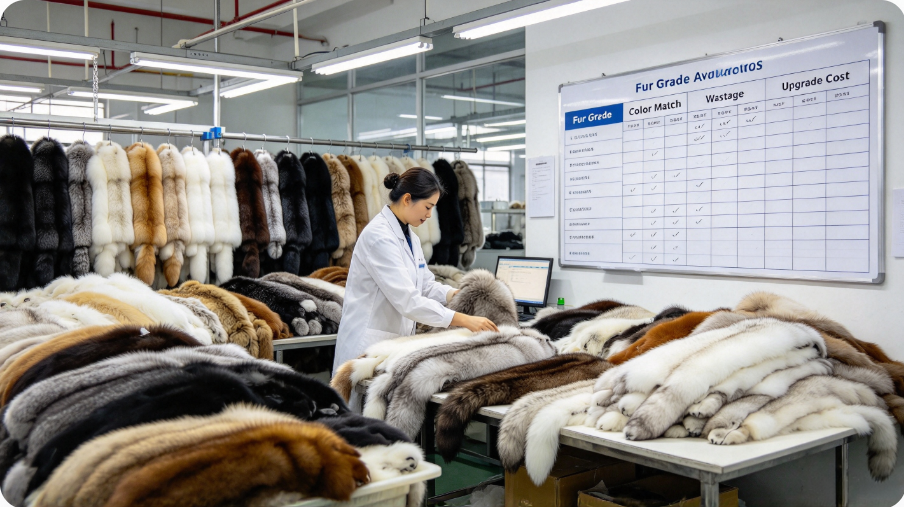
Fur raw material pricing fluctuates with market supply, grading and seasonal availability. Many factories quote based on a basic fur grade at the beginning, but add extra fees later when upgrading fur quality.
Common extra charges include:
- Premium fur selection: denser fur, longer hair length, better color consistency
- Color dyeing adjustments: custom dye shades, color matching fees, re-dye cost if the first batch fails color approval
- Waste surcharge: fur cutting has natural material wastage. Unprofessional factories may understate wastage rate at quotation stage and charge extra once production starts.
For faux fur orders, hidden costs can come from upgraded fabric weight, custom yarn composition and anti-shedding treatment. JSFUR clearly marks material grade, wastage ratio and dyeing cost in our formal quotation, so buyers know every expense upfront without surprise surcharges mid-production.
2. Pre-Production & Sample Revision Fees

Sample cost is well known by most buyers, but repeated revision fees are often neglected. Many factories only include one free sample revision. Additional changes to pattern, fur placement, lining or hardware will trigger extra pattern making and labor fees. If you require a new pre-production sample after major design modification, some suppliers charge separately for raw materials and workmanship again.
There are also technical fees: pattern grading for multi-size ranges, custom embroidery, brand label development and hangar tag mold charges. Small custom accessory molds can add unexpected cost for small and medium bulk orders.
Tip: Confirm the number of included sample revisions and mold ownership before signing the contract. At JSFUR, we list sample terms and modification limits in our quotation to prevent unexpected revision bills.
3. Third-Party Inspection & On-Site QC Expenses
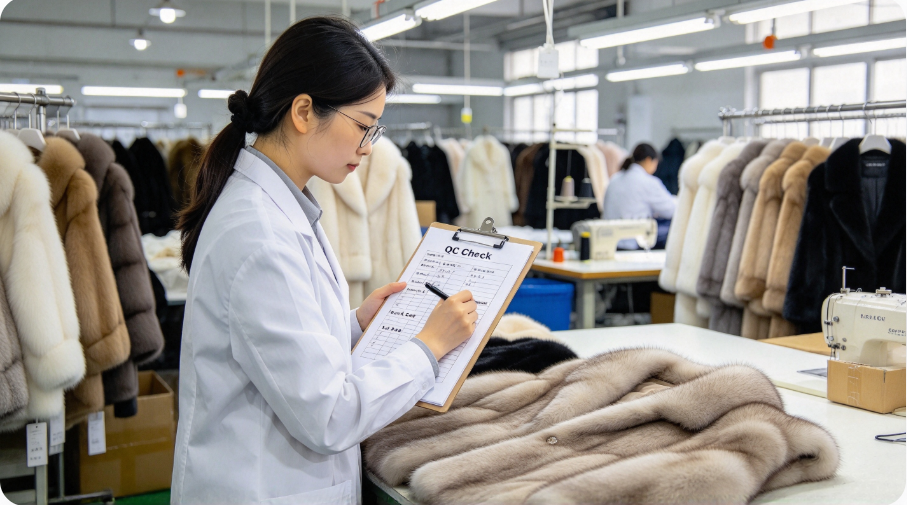
On-site bulk inspection is essential for fur garments, but inspection-related costs are easy to miss. If you hire a third-party QC team, you need to cover inspection service fees, factory pick-up, travel and overtime charges when the inspection needs to be arranged on weekends. Some factories will pass on internal re-inspection fees if the first QC fails due to quality issues.
Also note: rework cost is a major hidden item. If bulk garments fail quality check, you may need to pay extra labor for fur repairing, seam re-stitching or fur trimming. Poor-quality factories often shift rework costs to buyers instead of taking responsibility.
4. Logistics, Custom & Documentation Hidden Fees
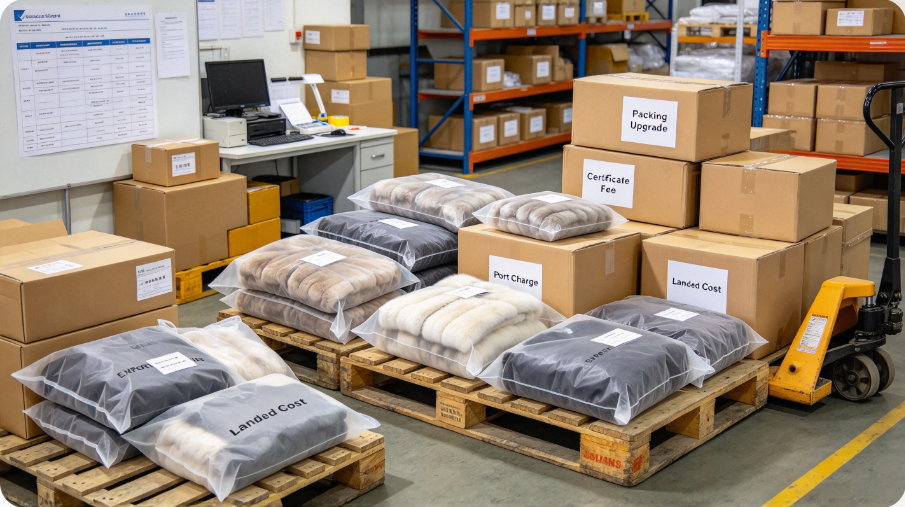
Cross-border shipment for fur apparel carries many easy-to-miss charges beyond basic freight:
- Cargo packaging upgrade fees: custom waterproof packaging, dust covers, reinforced cartons to protect fur from compression damage
- Customs documentation and certification fees: required certificates for fur products, commodity inspection charges
- Demurrage and storage fees: delays caused by document mismatch, production late delivery or port congestion
- Local destination charges: terminal handling, customs broker fee and warehouse unloading fees at destination port.
These costs are not included in the EXW factory price. Many new buyers only check ocean or air freight and ignore these auxiliary fees, leading to higher landed cost.
5. Currency Conversion & Payment Bank Charges

International wire transfer involves bank handling fees, intermediary bank deductions and currency exchange fluctuations. If your contract is not clearly defined, intermediary bank charges may be deducted from your payment amount, which can cause short payment issues. Some factories will then ask buyers to top up the missing amount.
Exchange rate volatility is another risk. If the quotation is valid for a short period, currency swings can increase your actual payment when you settle the deposit or balance payment. Always confirm quotation validity period and who bears bank transfer charges before order confirmation.
6. After-Sales Hidden Expenses: Returns & Defect Replacement
Fur garments have special storage and transport requirements. Even after bulk shipment, after-sales issues may create extra costs. When defective items arrive at your warehouse, you need to cover return shipping, rework labor and re-delivery cost. If the factory refuses to accept responsibility, all these expenses fall to your side.
Some suppliers offer limited after-sales terms and exclude costs for minor fur shedding, uneven fur direction or lining defects. Buyers should clarify the defect acceptance standard and responsibility allocation in the sales contract.
How to Avoid Hidden Costs When Ordering Fur Apparel in Bulk
- Request a full breakdown quotation, not just unit price. Ask suppliers to list material, labor, sample, packaging and documentation items separately.
- Lock down specifications in writing: fur grade, color standard, size range, acceptable defect limits and the number of free sample revisions.
- Clarify responsibility for rework, inspection failure, late delivery and all extra fees in your sales contract.
- Work with transparent manufacturers like JSFUR. We provide detailed itemized quotations and full specification sheets for every bulk fur apparel order. Our team will walk you through every potential cost item before production starts, helping you calculate accurate landed cost and protect your budget.
Conclusion
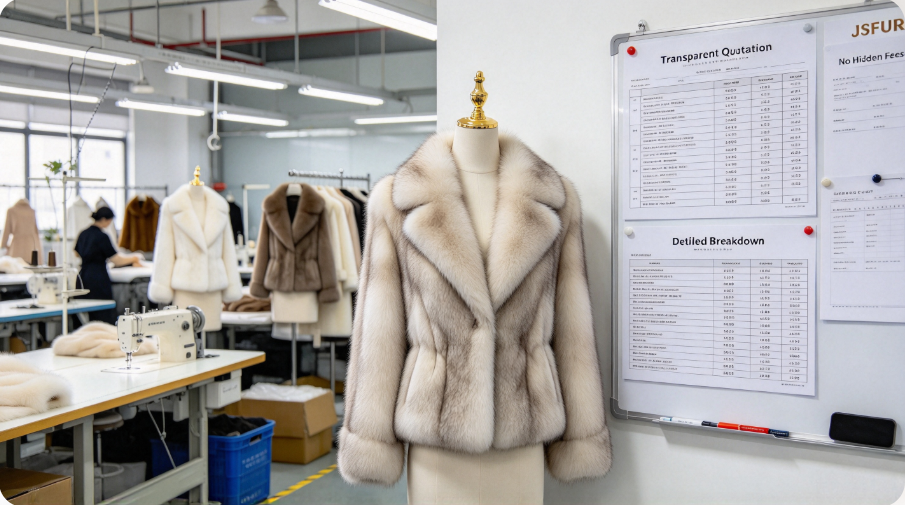
Hidden costs do not have to be unavoidable. The biggest way to control your bulk fur apparel budget is full transparency at the quotation stage. Low headline unit prices sometimes hide many unlisted surcharges that destroy your profit. By reviewing every potential extra cost carefully and partnering with an honest fur apparel manufacturer, you can keep your project on budget and reduce cross-border sourcing risks.
Ready to get a fully itemized quotation for your fur or faux fur bulk apparel order? Contact JSFUR via https://www.jsfur.com and our sourcing team will support your project with clear pricing and professional manufacturing services.
Share this article