Fur Garment Compliance Checklist for International Wholesale Importers
Introduction
Sourcing fur apparel for international wholesale markets brings unique compliance challenges. Many fashion importers focus only on sample quality, MOQs and pricing, overlooking regional regulatory requirements that can lead to customs seizures, unexpected fines, product recalls or reputational damage. Rules vary widely between the EU, UK, USA, Canada and other key retail markets, and compliance requirements continue to evolve every year.
A standardized compliance checklist helps wholesale buyers audit suppliers before placing bulk orders, validate documentation and ensure every fur garment shipment meets import requirements. As an experienced OEM & ODM fur apparel manufacturer, JSFUR supports B2B wholesale clients with full compliance documentation and transparent sourcing information for cross-border shipments. In this guide, we break down the essential checklist items every international fur apparel importer must review before production and shipment.
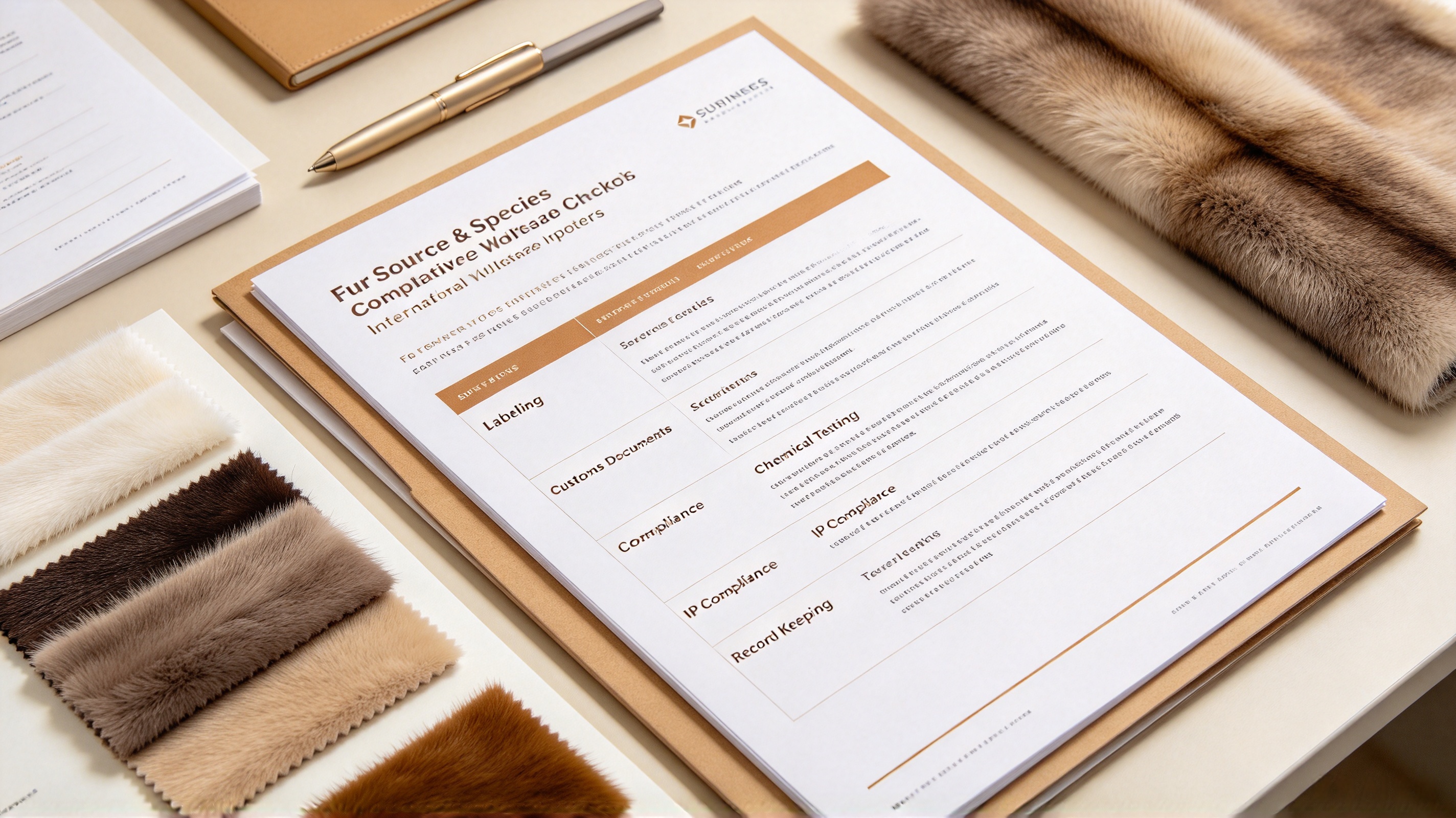
1. Fur Source & Species Documentation Verification
The foundation of fur apparel compliance is verifying the raw material origin and species declaration. False or incomplete species statements are one of the most common reasons shipments get detained at customs.
- Confirm official species declaration documents from your fur garment supplier. The document must clearly state the exact fur type, such as fox, raccoon, mink, or premium faux fur. Vague descriptions like “luxury fur” are not acceptable for customs clearance.
- Check traceability records for natural fur, including origin records of raw pellets.
- For faux fur products, obtain material composition certificates proving the garment is synthetic fibre, to avoid misclassification by customs authorities.
- Confirm the supplier can provide supporting certificates upon request. At JSFUR, we prepare clear material and species statements for all bulk orders to help importers simplify customs inspection.
Important note: Some regions enforce strict bans or restrictions on certain animal furs. Always cross-check the target country’s import prohibition list before finalizing your product line.
2. Product Labeling & Tag Compliance
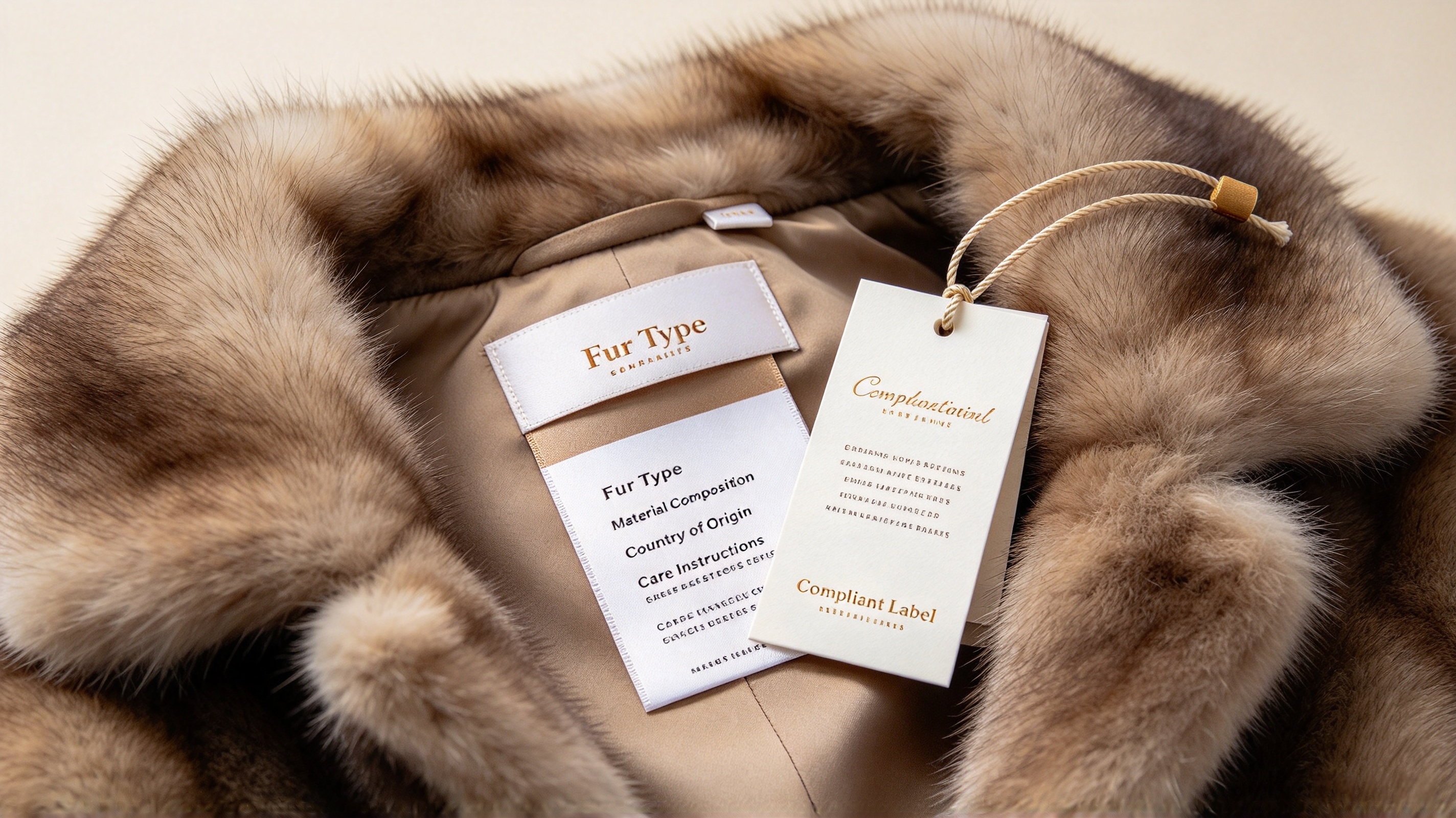
Labelling rules are market-specific and non-negotiable. Incorrect hang tags, inner care labels or size labels can result in goods being refused entry, even if all other documentation is correct.
- Fibre / Material label: Must accurately list fur type and fabric composition, in the language required by the destination market.
- Country of origin label: Clearly mark where the garment is manufactured.
- Care instruction labels: Include washing, storage and cleaning guidance appropriate for fur outerwear. Natural fur and faux fur require different care statements.
- Mandatory warning statements: Some territories require specific disclosure for fur products.
- Private label buyers: Confirm your supplier can print compliant custom labels and hang tags. JSFUR offers private label custom tag and label production aligned with regional import regulations for wholesale customers.
3. Import & Customs Documentation Checklist
Prepare the full document package before shipment arrives at the port. Missing certificates often create costly delays.
- Commercial invoice with accurate product description, unit price, total value, and fur material description
- Packing list matching invoice details
- Bill of Lading or Air Waybill
- Species and material certification
- Certificate of origin, if required for tariff preference
- Any additional declarations required by customs in your target country
Keep digital and physical copies of all documents. Retain records for several years as regulators may conduct post-import audits.

4. Chemical & Safety Compliance Testing
Fur garments and linings are subject to chemical safety regulations. Restricted substances testing is required for most western markets.
- Check restricted chemical standards, such as limits on heavy metals, formaldehyde, AZO dyes in textiles and trims.
- Request test reports from your supplier or third-party accredited labs before mass production.
- Testing should cover fur, lining, threads, buttons and all attached trims, not only the main fur material.
- JSFUR can cooperate with third-party testing organisations to complete required chemical testing for bulk orders, providing official test reports for your import clearance.

5. Commercial & Intellectual Property Compliance
Many wholesale buyers overlook IP compliance, which creates legal risk when selling finished fur apparel.
- Confirm all designs, patterns, hardware and decorative elements used in production do not infringe existing trademarks or copyrights.
- If you provide your own sketches and artwork, sign clear confidentiality agreements with your fur factory.
- Avoid using protected brand logos, patented decorative details without proper authorization.
6. Post-Arrival Audit & Record-Keeping
Compliance work does not end once goods clear customs. Importers maintain ongoing responsibility for products sold on the market.
- Conduct random spot checks of bulk goods to verify labels match documentation.
- Organize all certificates, test reports and supplier contracts in a searchable archive.
- Prepare a corrective action plan if any non-compliance is found during inspection.
7. Supplier Qualification Review for Compliance Capability
A factory’s ability to manage compliance directly reduces your importing risk. Use these points to evaluate your fur apparel manufacturer:
- Can the supplier consistently provide full species, material and test certificates?
- Does the team understand the labelling rules for your target market?
- Have they completed successful shipments to your import country before?
- Are they willing to adjust samples, tags and documentation to meet regulatory updates?
Working with a seasoned fur manufacturer like JSFUR removes much of the compliance guesswork. Our team stays updated on changing import rules for fur apparel, helping wholesale importers build compliant collections and avoid costly cross-border mistakes.

Conclusion
Compliance is not an afterthought for fur apparel wholesale imports — it needs to be integrated at the sampling and pre-production stage. Use this checklist at every order stage: supplier vetting, sample review, mass production, pre-shipment inspection and customs clearance.
By verifying fur species documentation, labels, safety test reports and customs paperwork in advance, wholesale importers can minimise customs holds, fines and product recalls. If you are planning a fur apparel bulk order and need support with compliant documentation, custom labelling and OEM/ODM manufacturing, contact JSFUR via https://www.jsfur.com to discuss your project.
Share this article