Differences Between Hand‑Made and Machine‑Made Fur Garments for Bulk Orders
Brand: JSFUR | Official Website: https://www.jsfur.com
Introduction
When sourcing bulk fur and premium faux‑fur apparel, wholesale buyers frequently encounter two production approaches: hand‑made artisanal assembly and industrial machine‑made manufacturing. Many buyers hold simplistic assumptions: hand‑made always equals premium quality, while machine‑made automatically means low‑grade goods. In reality, neither approach is universally superior. Each has distinct performance on workmanship, cost, lead‑time, MOQ, material suitability and target market positioning.
Misunderstanding these differences can lead to wrong technical‑pack specifications, unrealistic budget expectations, or selecting an unsuitable production method for your brand positioning. As a fur manufacturer with over 15‑year experience, JSFUR runs both skilled hand‑craft workshops and industrial fur‑sewing production lines for global OEM & ODM clients. This article breaks down the practical differences between hand‑made and machine‑made fur garments, helping wholesale buyers pick the correct production mode for their bulk projects.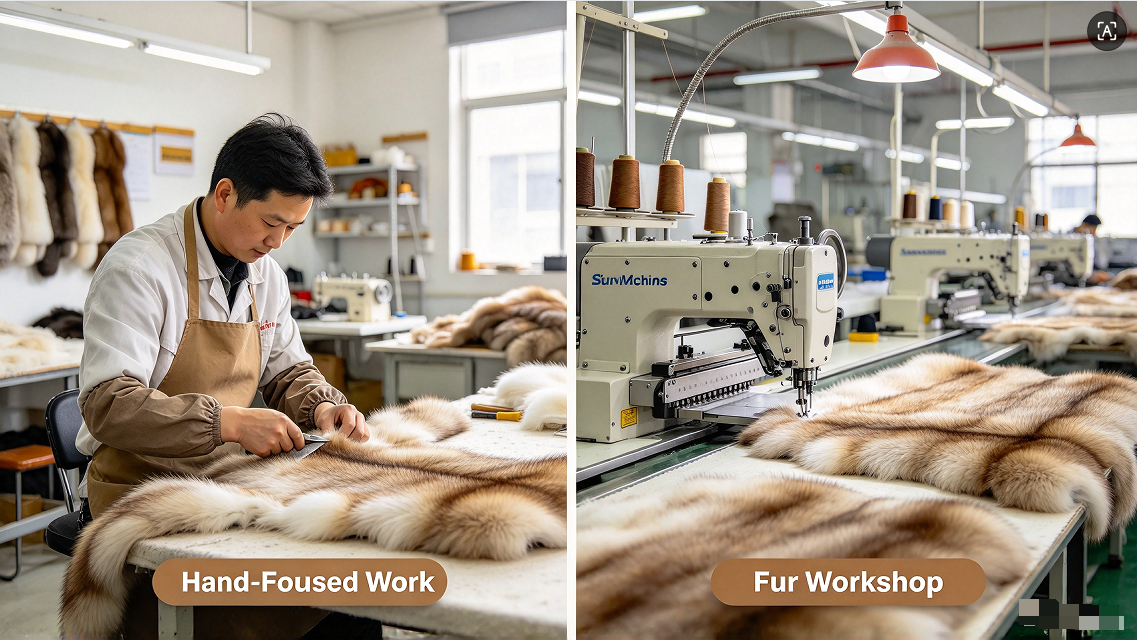
H2: Core Definition: Hand‑Made VS Machine‑Made for Fur Garment Production
H3: Hand‑Made Fur Garments
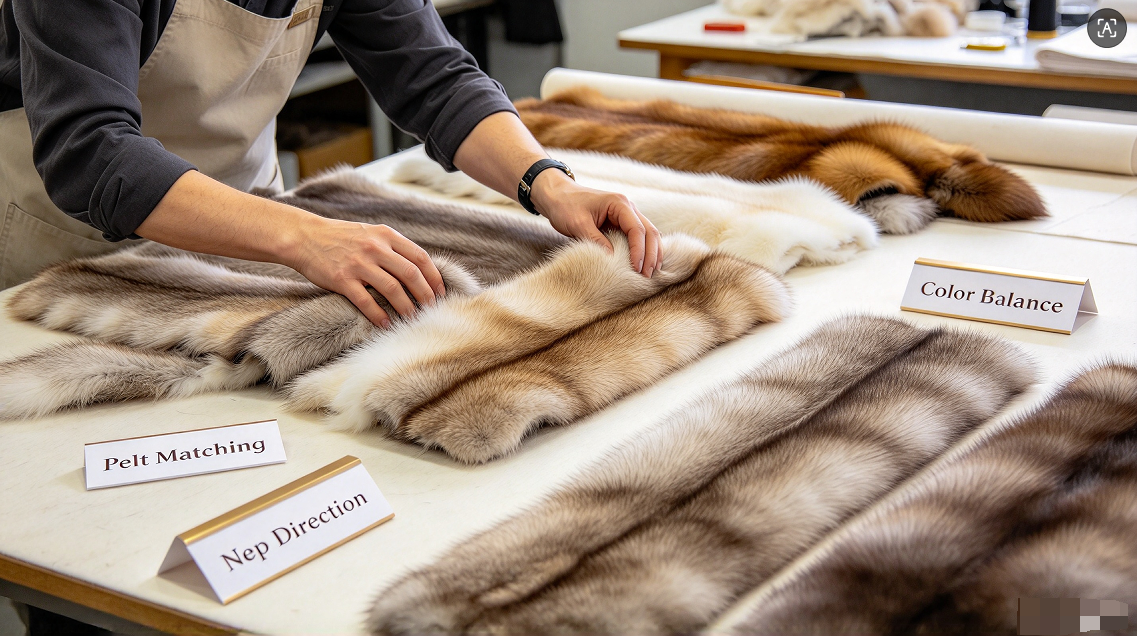
Hand‑made fur production relies on experienced fur artisans to complete pelt matching, partial hand‑stitching, manual trimming and detail adjustment. It does not mean every single stitch is done by hand. For natural fur coats, artisans manually evaluate each pelt’s nap direction, color shade and defects, adjust layout one‑by‑one, and complete complex curved seams, collar shaping and pelt joining by hand work. Hand‑work is heavily used for luxury real‑fur collections.
H3: Machine‑Made Fur Garments
Machine‑made fur garments use professional fur‑special industrial sewing machines, standardized cutting templates and assembly workflows. Most seam work, pelt joining and lining assembly are finished by equipment under workers’ supervision. Machine‑made applies for both real fur and premium faux‑fur. Modern high‑end machine‑made fur can achieve stable premium quality for mid‑to‑high‑volume orders.
Important note: Top‑grade fur factories often adopt hybrid workflows: machine for straight seams, hand‑work for complex curved details. Pure 100% full‑hand‑stitched fur coats are extremely rare for commercial bulk orders.
H2: Key Practical Differences for Bulk Wholesale Buyers
H3: 1. Workmanship & Visual Outcomes
Hand‑Made
- Artisans manually match every pelt: better control over nap flow, color transition and defect avoidance. Natural variations of animal pelts are balanced manually.
- Curved sections (collars, lapels, armholes) have softer, more natural shaping; less pulling stress on pelt leather backing.
- Minor subtle manual differences exist across individual pieces, each garment carries slight uniqueness.
- Ideal for complex patterns, irregular pelt splicing and high‑end bespoke styles.
Machine‑Made
- Higher batch‑to‑batch consistency. Every garment follows the same cutting template; unified silhouette and seam position for large runs.
- Straight seams, regular silhouettes perform excellently. Complex curved areas require precise machine setup to avoid fabric‑pulling.
- Very small natural differences between finished units, perfect for retail shelf consistency.
- Premium faux‑fur bulk production mostly depends on machine‑made workflow.
H3: 2. Durability & Structural Performance
Hand‑Made Hand‑applied stitches distribute tension flexibly across fur pelts. When local thread damage occurs, seams rarely unravel in a chain reaction. Good hand‑work reduces tearing risk on fragile real‑fur leather backing. However, final quality heavily depends on individual artisan skill level; inconsistent craftsmanship may appear if worker experience varies.
Machine‑Made Industrial fur‑sewing machines create tight, uniform lock‑stitches. If one stitch breaks, small sections risk progressive seam opening. Reliable factories adjust thread tension specifically for fur material to lower this risk. Well‑tuned machine‑made fur garments deliver stable long‑term durability suitable for everyday retail merchandise. Poor‑caliber machine setup can cause pelt stretching and leather‑back cracking.
H3: 3. Cost, MOQ & Lead Time
Hand‑Made
- Higher unit cost: heavy skilled‑labor input. Artisan working hours push up wholesale prices.
- Low‑to‑medium MOQ fits best; not designed for mass‑volume runs of hundreds‑to‑thousands units.
- Longer lead‑times: each piece requires more working hours; peak season artisan capacity becomes limited.
Machine‑Made
- Lower per‑unit cost at volume, obvious economies of scale.
- Flexible MOQ: works for small test batches and large‑scale wholesale orders alike.
- Predictable, shorter production cycles; easier for factories to schedule and scale output for winter peak season.
H3: 4. Material Suitability
Hand‑Made best fits: Luxury real fur (mink, fox, raccoon), complex custom splicing, high‑end capsule collections.
Machine‑Made best fits: Premium faux‑fur, regular‑style real‑fur outerwear, large‑volume seasonal collections, styles with relatively simple silhouette.
H3: 5. QC & Inspection Focus Points
For hand‑made bulk orders: Inspect pelt matching, seam tension, curved‑part shaping, consistency across different artisans’ output.
For machine‑made bulk orders: Check thread tension, pelt stretching, skipped stitches, and batch consistency across production runs.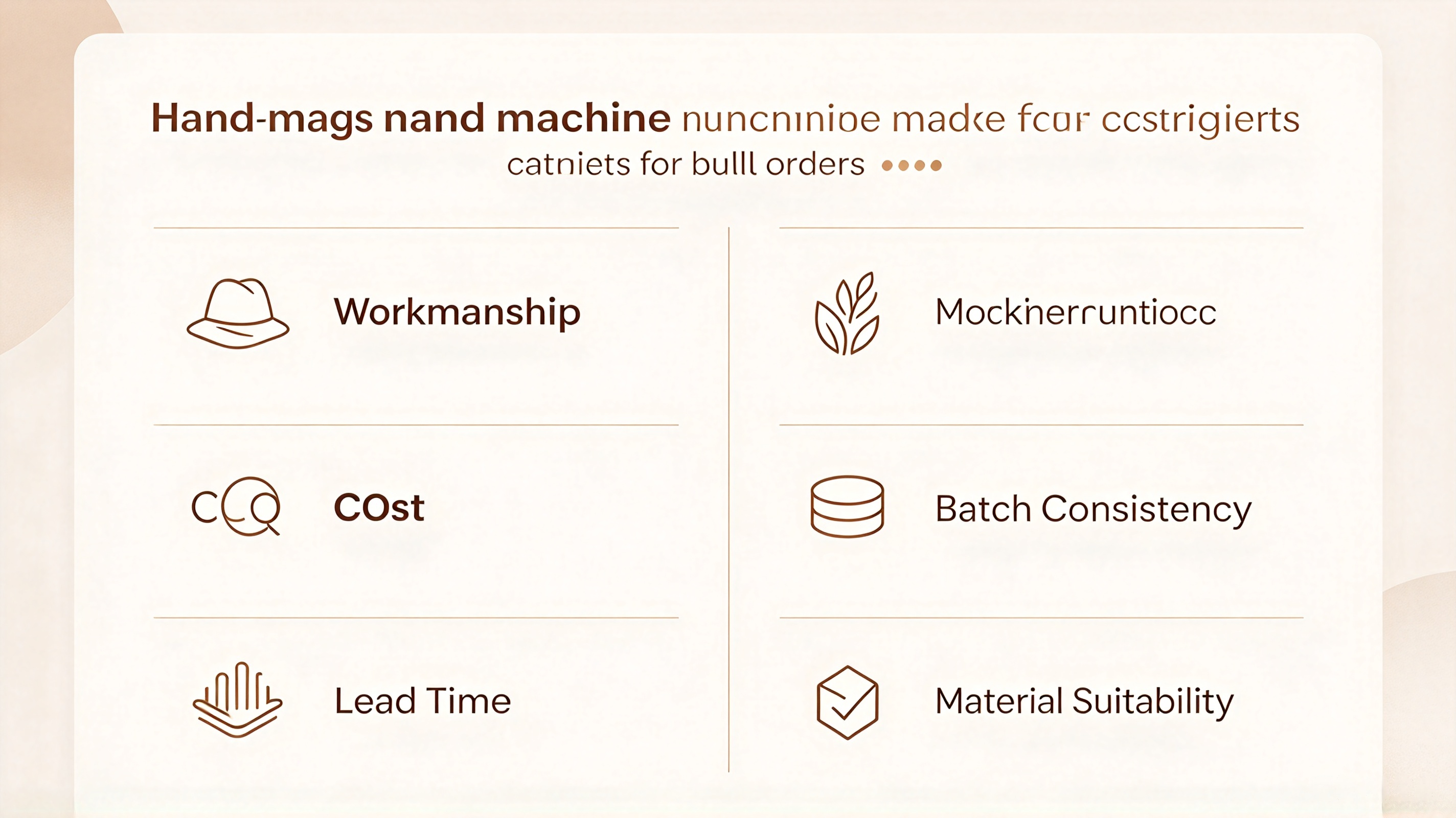
H2: How Wholesale Buyers Choose Between Hand‑Made, Machine‑Made or Hybrid Workflow
Use these practical decision‑making rules for your bulk fur projects:
- Luxury niche / capsule collection targeting high‑end boutiques: Prioritize hand‑focused production. Specify hand‑adjustment requirements for pelt matching and curved details in your tech‑pack. Accept higher unit price and longer lead‑time.
- Mid‑premium large‑volume seasonal collection, premium faux‑fur lines: Select qualified machine‑made production. Emphasize factory machine‑setup QC to prevent pelt stretching and skipped stitches.
- Most commercial fur bulk projects: Hybrid workflow (recommended). Machines handle long straight seams for efficiency; skilled artisans manually adjust pelt matching, collars, armholes and complex curved joints. This balances cost, consistency and premium visual quality. Many JSFUR bulk fur orders adopt this hybrid solution.
- Clarify production method in your quotation and sales contract. Avoid miscommunication: many factories label products “hand‑made” for marketing, while only partial details receive hand finishing. Write clear requirements inside your technical specification sheet.
Sourcing Tip: Always order pre‑production samples before mass production. Compare sample workmanship against your expectation, and confirm whether hand‑work scope meets your requirement.
H2: Common Misconceptions Buyers Should Avoid
- ❌ Misconception: Hand‑made always equals better durability. Fact: Poor‑skill hand‑work can create loose, uneven seams. High‑quality machine‑made fur from professional factories can out‑perform low‑level hand‑crafted output.
- ❌ Misconception: Machine‑made fur is only for cheap‑grade products. Fact: Professional fur‑special industrial machines can produce mid‑high‑end real‑fur and premium faux‑fur apparel for well‑known fashion brands.
- ❌ Misconception: All hand‑made fur means 100% every stitch sewn by human hands. Fact: Commercial bulk hand‑made fur almost always combines machine base‑seams plus manual artisan finishing. Pure fully‑hand‑stitched fur coats are custom‑couture level and rarely seen in wholesale.
H2: JSFUR Flexible Production Workflow for Bulk Fur Orders
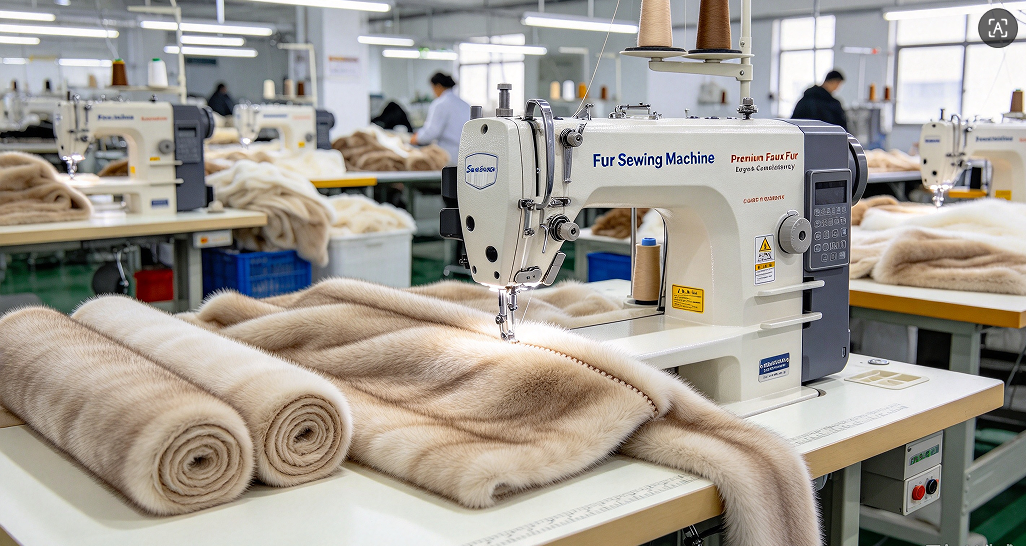
At JSFUR, we maintain both experienced artisan teams and professional fur‑sewing machine lines to serve different wholesale client requirements:
- Hand‑focused production: For luxury real‑fur capsule lines, bespoke private‑label projects. Our artisans manually optimize pelt matching and complex detail shaping.
- Industrial machine‑made production: For premium faux‑fur and high‑volume regular‑style real‑fur bulk orders, guaranteeing batch consistency and efficient lead‑times.
- Hybrid combined workflow: Most popular choice for B2B buyers, balancing cost, quality and delivery schedule.
- Clear specification communication: We document hand‑work scope inside quotation documents and tech‑pack review, so buyers fully understand what is included.
Whether you plan luxury hand‑finished fur collections or large‑volume machine‑manufactured seasonal lines, visit https://www.jsfur.com to share your project specifications and request sample development.
Conclusion
Hand‑made and machine‑made fur garment production each carry their own strengths and limitations for bulk wholesale. Hand‑crafted work excels in artisanal detail, pelt matching and complex luxury silhouettes, yet comes with higher cost and longer lead‑time. Qualified machine‑made fur manufacturing delivers stable batch consistency, cost‑efficiency and scalability for seasonal large‑volume orders. Very often, the hybrid workflow offers the best commercial balance for fur apparel wholesale.
Instead of blindly chasing “hand‑made” marketing labels, wholesale buyers should define production requirements according to brand positioning, target price‑point, order volume and delivery schedule, and lock these requirements within contracts and technical documents. Request pre‑production samples to verify workmanship before releasing mass‑production.
Share this article