
Common Fur Repair Issues After Shipment and Preventive Solutions
Brand: JSFUR | Official Website: https://www.jsfur.com
Introduction
Even when fur garments pass strict factory pre‑shipment QC, various damage problems may still surface after cross‑border arrival. Long‑haul ocean or air transit, multiple cargo transfers, container humidity, rough handling and improper warehouse storage can trigger aesthetic or structural defects on real fur and premium faux‑fur apparel. Many wholesale buyers mistakenly treat post‑arrival damage as factory production defects, while in reality many issues stem from transit and logistics conditions.
Repairing bulk fur orders after arrival costs buyers extra labor, return freight and lost sales opportunities. It also triggers disputes between importers and manufacturers. At JSFUR, we have handled thousands of cross‑border fur shipments for global wholesale clients. This article outlines the most frequent fur repair‑related problems found after shipment, explains root causes, shares feasible repair options, and focuses on actionable preventive measures that buyers can implement before order production and loading.
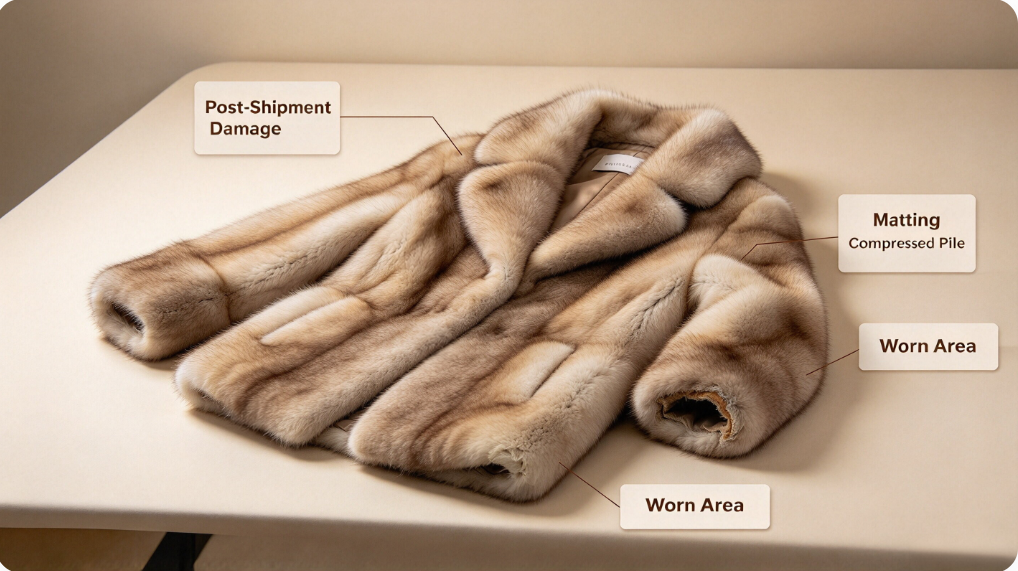
H2: Most Common Fur‑Related Problems Discovered After Shipment
H3: 1. Fur Matting & Fiber Compression
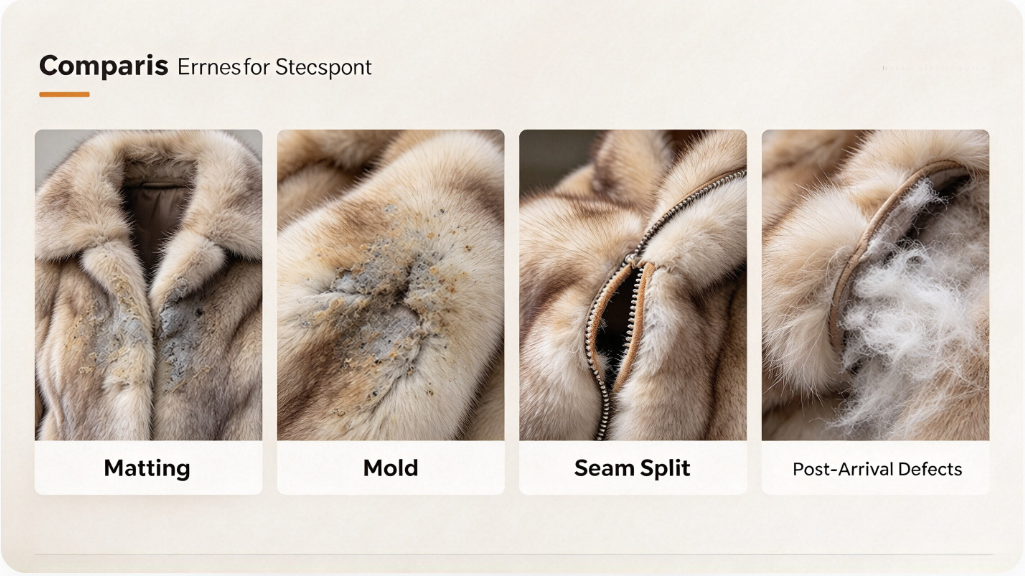
Symptoms: Clumped, flattened fur pile; uneven loft across shoulders, sleeves and body sections. Real fur hairs stick together; premium faux‑fur fibers become compressed and lose fluffy volume. Root causes: Heavy carton stacking pressure during container loading; high humidity in sea‑freight containers; garments tightly folded without interleaving tissue paper. Repair possibility: Mostly repairable. Real fur can be professionally brushed and glazed. Premium faux‑fur can be restored with low‑temperature steam and careful combing. Severe long‑term compression may leave permanent deformation.
H3: 2. Mold, Mildew and Odor on Real Fur Pelt Backing
Symptoms: Grey‑white mold spots, musty smell, stiff and brittle leather pelt backing, slight discoloration on fur surface. Root causes: Trapped moisture inside sealed cartons; insufficient desiccants; garments not fully dried before packing; condensation inside sea‑shipping containers. Repair possibility: Minor surface mold can be treated via professional fur cleaning. Once the leather backing turns hard and brittle, damage is permanent and cannot be fully restored.
H3: 3. Excessive Shedding and Hair Slippage
Symptoms: Large amount of fur hair falling off during unpacking. Distinguish: very light shedding is normal for new fur; excessive hair loss indicates real‑fur pelt weakness or faux‑fur fiber fixation failure. Root causes: Poor tanning of natural fur pelts; high‑humidity transit weakens pelt leather; rough friction inside cartons; low‑quality faux‑fur fabric. Repair possibility: Minor shedding can be improved by professional fur conditioning. Severe hair slippage requires complex re‑work or garment replacement.
H3: 4. Seam Opening, Lining Tearing and Hardware Damage
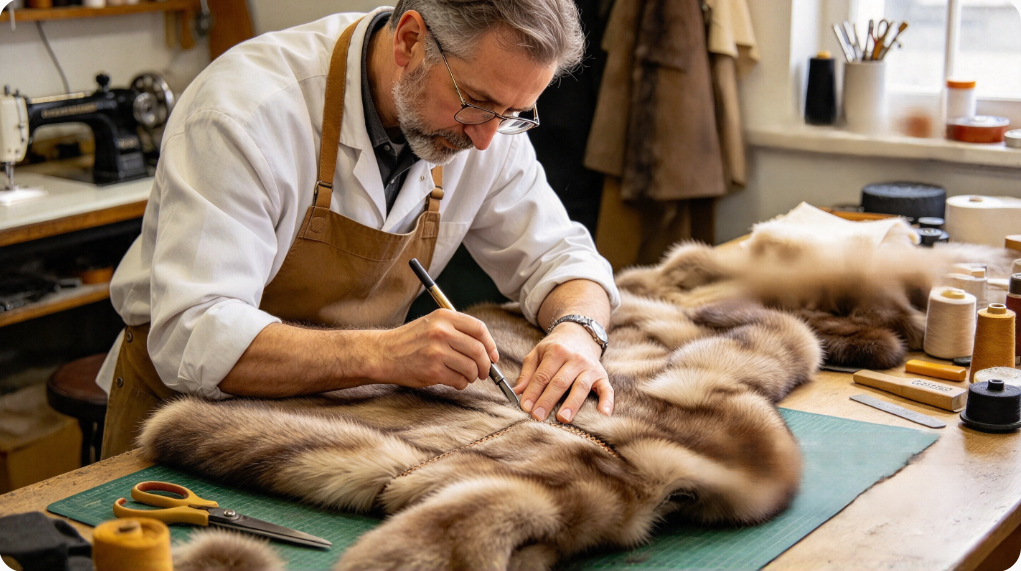
Symptoms: Split fur‑pelt seams, torn inner lining, broken or stuck zippers, loose buttons and trim accessories found after unpacking. Root causes: Continuous vibration during long‑distance transport; garments squeezed under heavy cargo; insufficient seam strength from production. Repair possibility: Most structural failures are repairable via re‑stitching, zipper replacement and lining patching. Repair for fur‑pelt seams needs experienced fur artisans, ordinary clothing repair shops cannot handle this work well.
H3: 5. Surface Abrasion and Stain Marks
Symptoms: Bare fur spots caused by rubbing against carton edges or metal hardware; dust, oil stains on fur pile. Root causes: No protective tissue paper between hardware and fur surface; rough carton inner walls; dirty container environment. Repair possibility: Light stains can be cleaned professionally. Deep abrasion creating bare patches often needs pelt replacement for real‑fur items.
H2: Practical Repair Solutions for Wholesale Buyers After Receiving Damaged Goods
For bulk wholesale shipments, you need a clear workflow once damage is found:
- Preserve original evidence: Keep shipping cartons, dust bags and packing materials intact. Take photos and short videos of defective goods before any cleaning or repair work. These records are critical for insurance or supplier claim processes.
-
Classify damage severity:
- Minor cosmetic damage (slight matting, light dust): Solve locally with professional fur cleaning and brushing service, no need for return shipment.
- Moderate structural damage (open seams, broken zippers): Source local fur‑specialized ateliers for batch repair. Calculate repair labor cost for potential claim.
- Severe permanent damage (brittle moldy pelt, large‑area hair slippage): These units are not repairable; negotiate replacement or compensation with supplier or cargo insurance provider.
- Avoid improper DIY handling: Never apply high‑heat dryers, household washing or strong detergent to real fur. Wrong operations will enlarge damage and void claim eligibility.
Important note: Standard garment dry‑cleaners are often not equipped for real‑fur restoration. Always select technicians who specialize in fur apparel.
H2: Preventive Measures: Reduce Post‑Shipment Repair Risks Before Loading
Repair after arrival always creates extra cost. Risk prevention should be agreed at quotation and pre‑production phase.
H3: Pre‑production & Sample Stage
- Confirm material quality standards: For real fur, specify pelt tanning quality requirements; for faux fur, test anti‑shedding performance on pre‑production samples.
- Add fur‑related transit risk clauses in sales contract: clarify responsibility division for damages caused by production defects VS damages caused by logistics and container environment.
H3: Factory Packing Requirements (Critical for cross‑border)
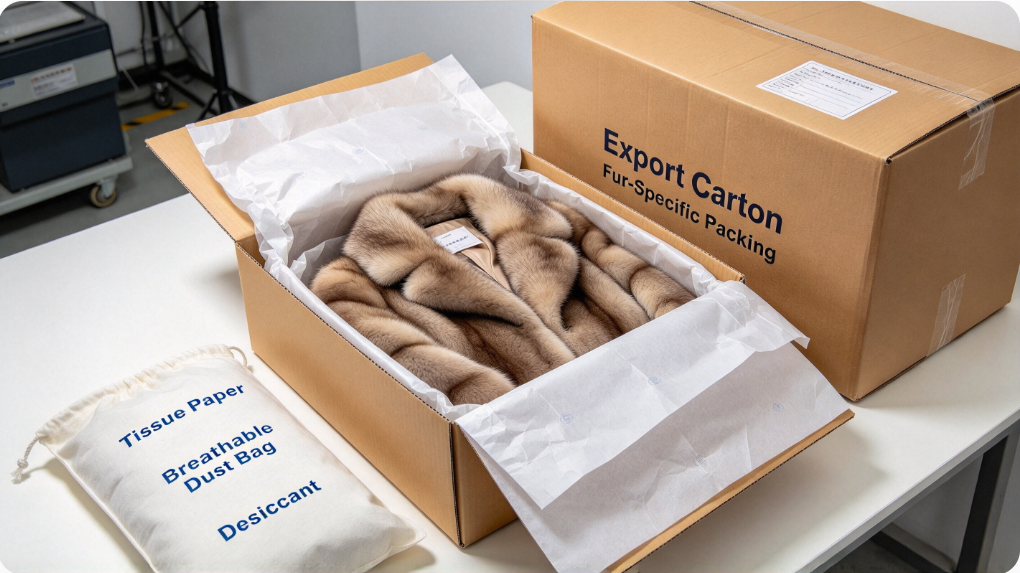
- Use acid‑free tissue paper between garment folds to avoid hardware abrasion and sharp creases.
- Individual breathable cotton dust bags; prohibit fully sealed plastic bags for natural fur items.
- Place proper quantity of desiccant inside each export carton for sea‑freight orders.
- Do not overfill cartons, avoid over‑stacking during pallet loading.
- Print clear handling marks: DO NOT CRUSH, MOISTURE SENSITIVE on multiple carton sides.
JSFUR follows standardized fur‑specific packing SOP for sea freight and air freight separately, to lower the probability of transit‑induced damage.
H3: Pre‑loading Documentation & Insurance Preparation
- Request factory to take complete photos of packed cartons and pallets before container sealing.
- Purchase cargo insurance that explicitly covers mold, crushing, abrasion damage. Many basic freight insurance exclude mold losses without additional endorsement.
H3: In‑house Warehouse Receiving Standard
- Unpack cartons in dry, well‑ventilated warehouse space immediately after goods arrive. Do not leave sealed cartons sitting in damp dock areas.
- Complete visual inspection within the claim time window defined by contract and insurance policy.
H2: How JSFUR Minimizes Post‑Shipment Repair Risks for Wholesale Partners
As an experienced fur apparel OEM & ODM manufacturer, JSFUR integrates transit‑damage prevention through the whole order workflow:
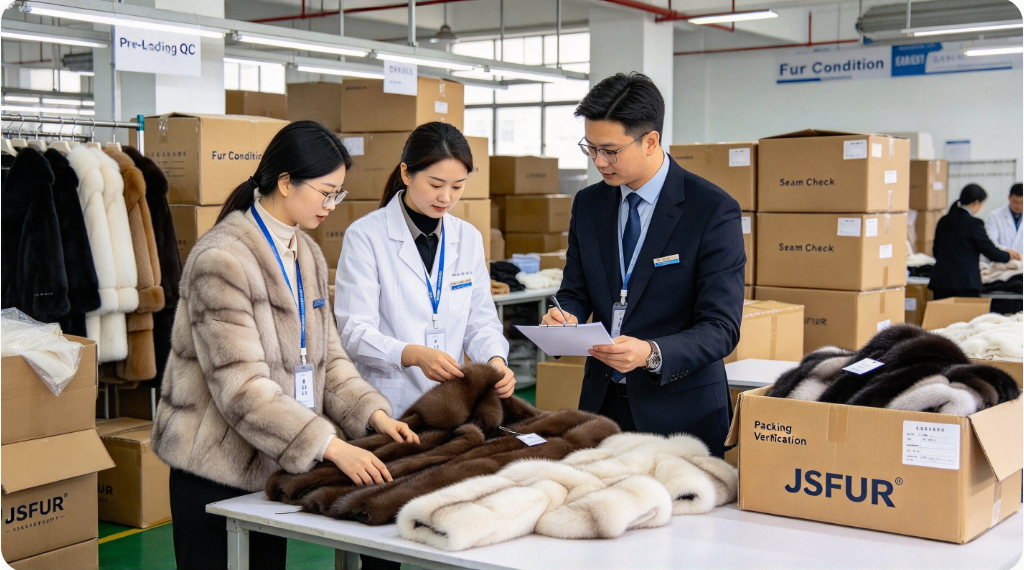
- Multi‑stage QC inspection: We check fur condition, seam firmness, hardware and lining before packing.
- Fur‑tailored export packaging: Separate packing specifications for sea freight and air freight, including desiccant configuration and anti‑crush carton selection.
- Pre‑loading visual records: We provide packing and pallet photos for every bulk shipment for buyer reference.
- Clear communication on logistics risks: Our team reminds buyers about cargo insurance requirements and receiving‑warehouse best practices.
- Open‑minded for third‑party pre‑shipment inspection.
If you are sourcing real fur or premium faux‑fur bulk apparel, please visit https://www.jsfur.com to learn about our production and packaging solutions.
Conclusion
Many fur repair issues appearing after shipment are not manufacturing defects, but consequences of long‑distance transit environment and improper packing. Wholesale buyers can greatly cut repair costs and claim disputes by clarifying standards in contracts, enforcing fur‑specialized export packaging, purchasing adequate cargo insurance and following standardized receiving inspection procedures.
Choosing a manufacturer who understands fur’s vulnerability during cross‑border transport helps you avoid costly post‑shipment repair headaches.
Share this article