
How to Avoid Delivery Delays When Sourcing Winter Fur Garments
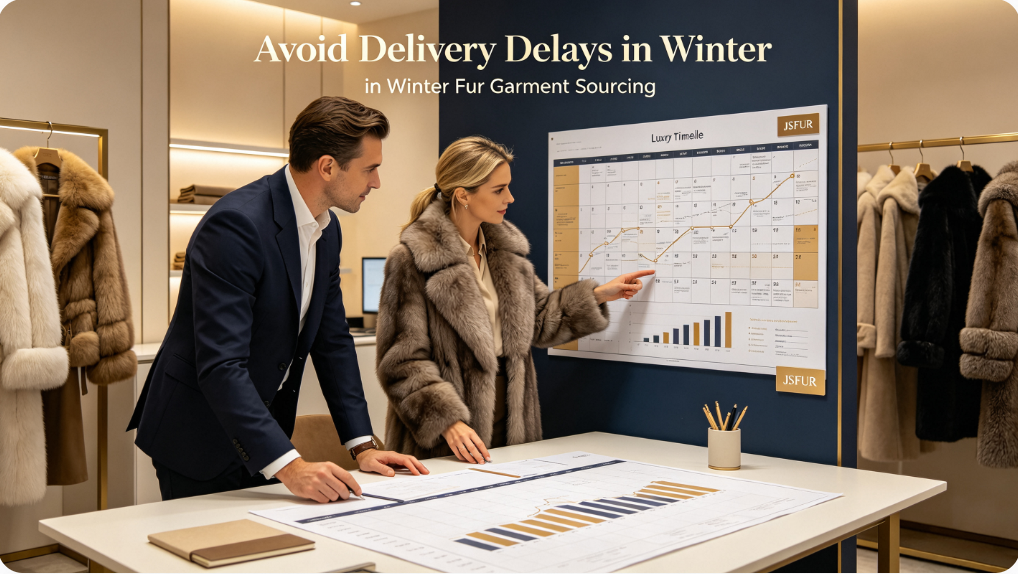
Brand: JSFUR | Official Website: https://www.jsfur.com
Introduction
Winter fur apparel occupies a narrow, strictly seasonal sales window for global fashion brands. Once shipments fall behind schedule, brands face empty retail shelves, missed holiday promotion cycles, slashed seasonal revenue and irreversible damage to brand reputation. Unlike ordinary ready-to-wear, fur production is constrained by natural fur supply cycles, manual-intensive craftsmanship, specialized tanning and dyeing procedures. Every autumn, fur factories enter peak order season, and delivery delays become one of the biggest headaches for procurement managers.
Many delays are not caused by sudden factory emergencies but poor early planning, unclear milestone tracking and underestimated fur-specific production cycles. As an experienced OEM & ODM fur apparel manufacturer serving worldwide wholesale buyers, JSFUR summarizes practical, industry-targeted strategies to help buyers build stable seasonal sourcing schedules, mitigate timeline risks and ensure fur goods arrive before peak winter sales. You can explore our custom fur manufacturing solutions at https://www.jsfur.com.
Unique Seasonal Factors That Trigger Fur Garment Delivery Delays
Before establishing risk prevention measures, buyers need to understand why winter fur orders are far more vulnerable to timeline slippage than general apparel orders.
• Restricted raw material cycles: Natural fur pelt supply relies on seasonal auctions and breeding cycles. Custom dyed fur requires additional tanning and color-fixing lead time; shortages of specific fur grades will directly suspend production arrangements.
• Heavy dependence on skilled manual labour: Fur matching, splicing and trimming cannot be fully automated. Senior fur artisans are limited. When factories receive concentrated winter orders, production capacity quickly reaches saturation.
• Overlapping peak demand worldwide: Brands from Europe, North America and other regions place winter fur orders within the same timeframe, creating tight factory production slots.
• Complicated pre-production iteration risks: Late sample revisions, repeated PPS adjustments and delayed written approvals compress the bulk production window.
• Global logistics congestion: Ocean freight space shortage, port congestion and customs inspection delays frequently occur in autumn, extending overall end-to-end lead time.
1. Advance Order Planning & Realistic Backward Timeline Arrangement

The most effective way to prevent delays is to start sourcing far earlier than you would for regular clothing. Most procurement teams make the mistake of calculating lead time only from bulk production start date, ignoring raw material procurement, sampling, PPS confirmation and logistics cycles.
Professional fur buyers adopt backward scheduling: set your target warehouse arrival date first, then reserve sufficient time for shipping, QC, bulk manufacturing, raw material preparation and sample development. Always build independent time buffers for each stage instead of one single buffer at the end. For custom fur styles with special dyeing or complex splicing, we recommend planning 2–4 weeks of extra contingency time.
At JSFUR, we actively share seasonal capacity forecasts with clients in advance. We remind long-term buyers to lock production slots 3–6 months ahead of winter season to avoid fully occupied workshop schedules during peak months.
2. Lock Raw Material Allocation and Avoid Pelt Supply Bottlenecks
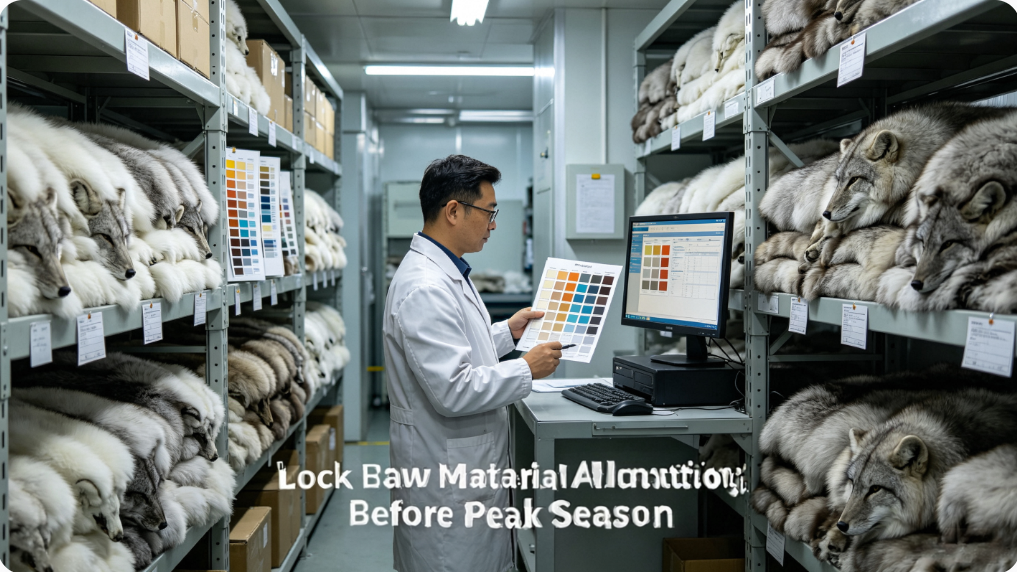
Raw material shortage is the top cause of suspended fur bulk orders. Many suppliers confirm production schedules without reserving matching fur batches. When fur markets tighten, available pelts are allocated to customers who complete deposit payment and material reservation first.
For seasonal winter orders, formalize fur material reservation after style confirmation. Clarify fur type, grade, color batch and required quantity in written agreements. If you require custom dyed fur, confirm tanning factory schedules upfront, as special color orders often have longer queues. Avoid frequent last-minute changes to fur specifications after material sourcing begins, which will reset the entire material timeline.
3. Strictly Control Pre-Production Revisions and Formal Approval Rhythm
Uncontrolled, repeated changes during sampling stage eat up production time and become hidden delay triggers. Many buyers continue adjusting design details, hardware, lining and patterns after the agreed timeline. Each revision requires updated samples and internal factory re-scheduling.
Set a clear cut-off date for all design and specification modifications before bulk production preparation. Complete all tech pack adjustments, sample feedback and formal PPS written approval within the agreed schedule. Do not allow new major changes after PPS confirmation. This rule stabilizes factory planning and prevents last-minute schedule disruption.
4. Establish Clear Milestone Tracking Mechanism Instead of Only Final Deadline Supervision

Tracking only the final shipment date makes it impossible to detect risks early. Once problems emerge shortly before delivery, there is little room for remedy. Professional fur suppliers divide each order into observable key milestones: raw material arrival date, production startup date, mid-production checkpoint, finished bulk QC date, packing completion and container loading date.
Agree on regular progress updates with your manufacturer. Require timely notification if any milestone faces potential slippage. Early warning enables both sides to adjust plans, such as prioritizing core SKUs or adjusting logistics modes. JSFUR adopts standardized order milestone tracking for all winter fur orders, actively sending production progress reports to clients and escalating risks immediately once timeline deviation appears.
5. Clarify Production Terms and Negotiate Reasonable Delivery Protection Clauses
Verbal delivery commitments carry no binding force. All winter seasonal orders should record agreed timelines, scope of force majeure and delay handling solutions in formal contracts or PI.
Key clauses to confirm: agreed loading date, allowed grace period, communication obligations if delays occur, and solutions for prolonged schedule slippage. Distinguish controllable factory delays from external factors such as extreme logistics disruptions. Transparent terms reduce disputes and push manufacturers to prioritize schedule management.
6. Prepare Diversified Logistics Solutions to Avoid Transit Delays
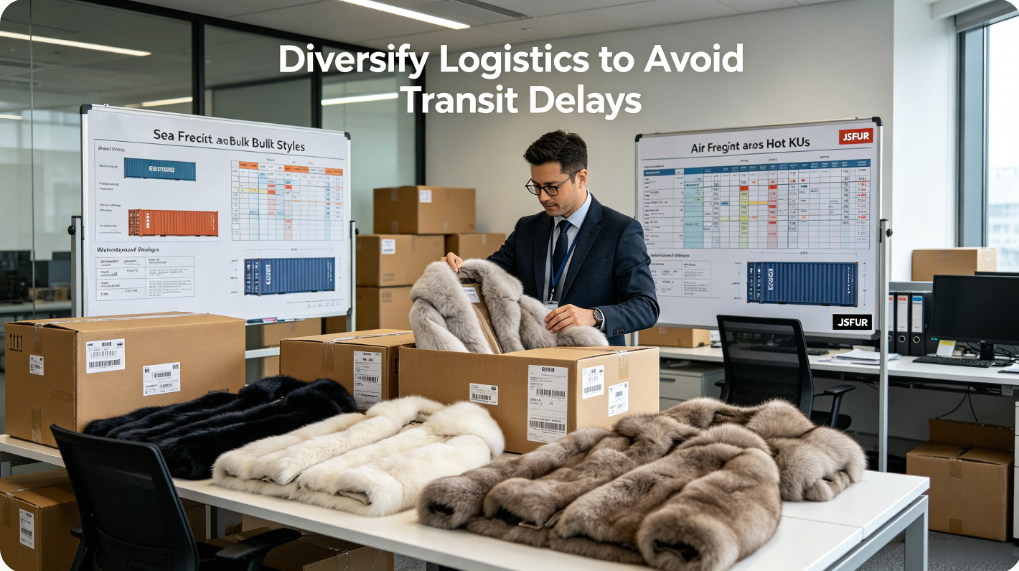
Even when bulk production finishes on time, logistics congestion can still cause goods to miss the sales window. Relying on a single shipping channel carries high seasonal risks.
Develop dual logistics strategies: arrange sea freight for large-volume basic styles with sufficient lead time; reserve air freight options for small-batch hot-selling SKUs with tight deadlines. Confirm carrier space booking plans in advance during autumn peak season. Meanwhile, standardize fur waterproof packaging to avoid cargo inspection hold-ups caused by damp damage.
7. Select Fur Manufacturers With Stable Peak Season Capacity Management
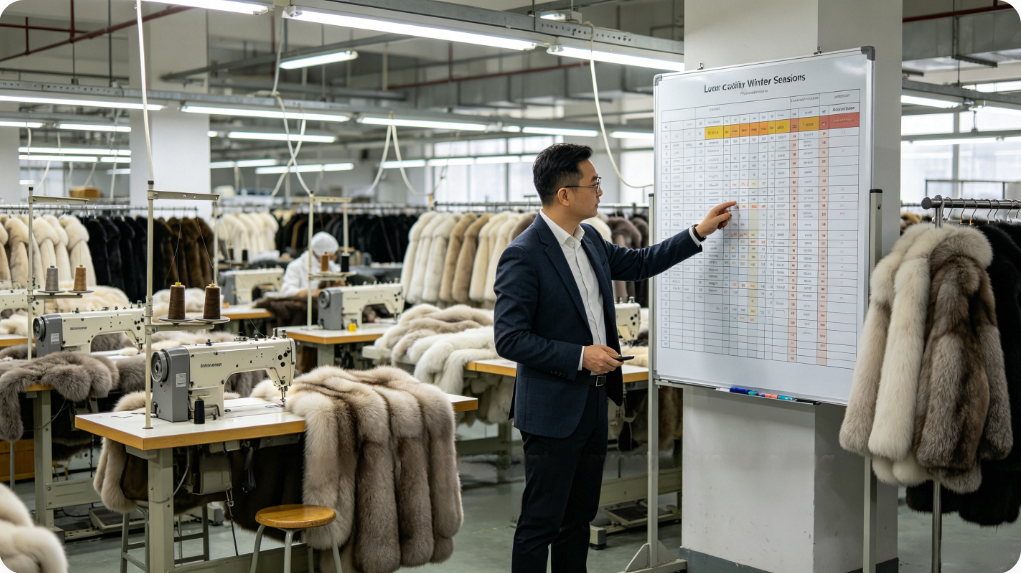
Not all fur factories can handle order schedules steadily during winter rush periods. Small workshops frequently accept excessive orders beyond their actual capacity, leading to widespread order backlogs.
When evaluating suppliers, check their historical on-time delivery performance in previous winter seasons. Reliable fur manufacturers will reasonably control order volume to prevent overbooking. As a long-term fur OEM & ODM factory, JSFUR implements scientific capacity scheduling every year. We will not accept new orders once workshop capacity reaches limits, ensuring existing clients’ winter orders progress as scheduled.
How JSFUR Helps Clients Prevent Winter Fur Order Delivery Delays
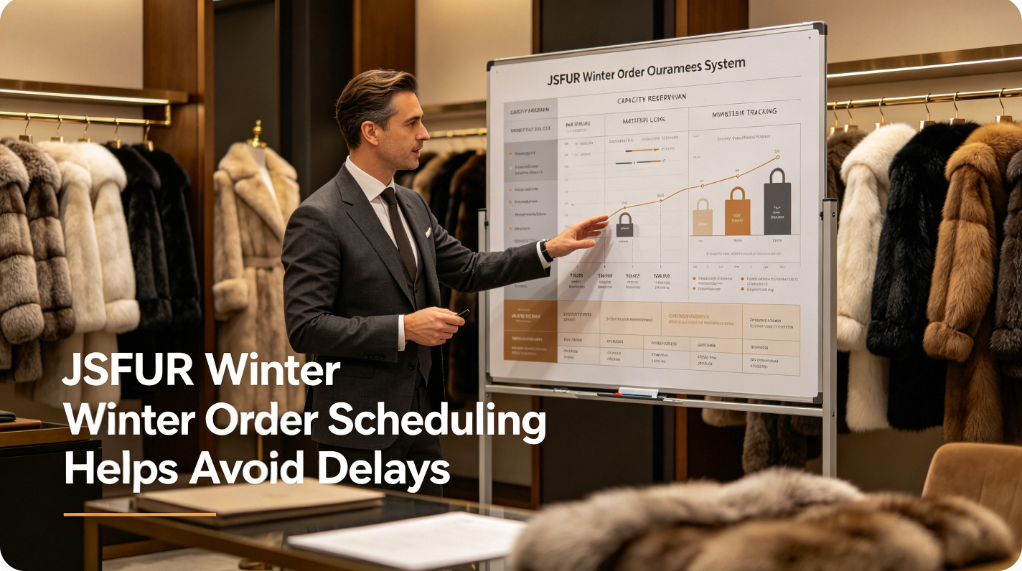
Drawing on years of experience serving global winter fur brands, JSFUR builds a complete seasonal order guarantee system to stabilize lead times:
• Advance seasonal capacity notification system: inform clients of available production slots several months before winter peak
• Formal raw material reservation service to lock fur batches and avoid market supply volatility
• Standard milestone tracking system with active periodic order progress updates
• Clear sampling and revision timetable to limit uncontrolled last-minute adjustments
• Dedicated merchandiser team to coordinate production, QC and shipment arrangement
• Proactive risk notification: immediately communicate potential timeline risks and propose alternative solutions
Conclusion
Sourcing winter fur garments is a time-sensitive supply chain project. Delivery delays rarely happen overnight; they accumulate from insufficient early planning, loose process management and underestimated fur industry cycle characteristics. By locking production slots ahead of schedule, securing raw materials, controlling sample revision cycles, tracking production milestones and cooperating with capacity-stable fur manufacturers, buyers can greatly reduce the risk of missed seasonal sales opportunities.
If you are looking for a reliable fur apparel OEM & ODM partner with mature seasonal order scheduling capability for your winter collection, contact JSFUR to discuss your sourcing plan: https://www.jsfur.com
Share this article